Tuesday, September 27, 2016

The global economy is caught in a trap. The only way out is creative destruction

Monetary policy is preventing the bubble from bursting and forcing central banks into more radical measures. The sooner the purge, the milder it will be

Almost eight years ago, the Lehman Brothers collapse plunged the global economy into recession. The interbank market collapsed, and the entire industrialised world was thrown into the worst crisis since the end of the second world war. Though central banks have maintained ultra-low interest rates, the crisis hasn’t yet been fully overcome. On the contrary, numerous economies, such as the southern European countries and France, simply aren’t making any headway. And Japan has been on the ropes for a quarter of a century.

Some economists believe that this is evidence of “secular stagnation”, a phenomenon described in 1938 by the American economist Alvin Hansen, who drew on Karl Marx’s Law of the Tendency of the Rate of Profit to Fall. Owing to the gradual exhaustion of profitable investment projects, according to this view, the natural real interest rate has continued to fall. Stabilising the economy thus is possible only by an equivalent decline in policy interest rates.

In view of the huge credit bubble that preceded the crisis in Japan, the United States, and southern Europe, and the aggressive policies pursued by central banks over the past few years, I doubt that this theory is correct. In fact, I find it plausible that a very different mechanism lies behind the post-2008 stagnation, which I refer to as “self-inflicted malaise”.

This hypothesis is best understood in the context of the economist Joseph Schumpeter’s theory of the business cycle. Faulty expectations on the part of market participants regularly cause credit and asset-price bubbles. Investors, expecting prices and incomes to rise, purchase residential and commercial properties, and they take chances on new business ventures. Real estate prices start to rise, a construction boom occurs, and a new phase of rapid expansion begins, partly sustained by the revitalisation of the domestic economy, including services. The growth in incomes increasingly emboldens borrowers, which further heats things up.

Then the bubble bursts. Investment collapses and real estate prices fall; businesses and banks go bankrupt; factories and residential buildings are vacated; and employees are laid off. Once prices and wages have fallen, new investors step in with new business ideas and establish new firms. After this “creative destruction”, a new phase of rapid expansion sets in.

In the current crisis, however, monetary policy pre-empted the creative destruction that could have formed the basis for a new upswing in growth. Asset holders talked central bankers into believing that Schumpeter’s economic cycle could be overcome by large-scale bond purchases financed via the printing press, and by corresponding interest-rate reductions.

These measures stopped the fall in asset prices halfway and thus saved much wealth. But they also prevented young entrepreneurs and investors from risking a new start. Instead, established firms remained in place, keeping themselves afloat but lacking the wherewithal for new investments. In Japan and Europe, in particular, large numbers of such zombie firms and banks survived, and they are now blocking would-be competitors able to drive the next upswing in growth. The resulting economic ossification looks like the secular stagnation that Hansen described; in fact, the malaise is self-inflicted.

And, because low interest rates have reduced asset managers’ returns, some central banks – and the European Central Bank, in particular – have relied on successive interest-rate cuts in an effort to engineer ersatz value gains for assets. The economy is thus caught in a trap, forcing the ECB to engage in ever more radical monetary policy measures. Its current programme of quantitative easing is meant to double the money supply in a very short period. Further guns are being moved into position, such as successively more negative nominal interest rates or so-called helicopter money.

The only way out of the trap is a hefty dose of creative destruction, which in Europe would have to be accompanied by debt relief and exits from the eurozone, with subsequent currency devaluations. The shock would be painful for the incumbent wealth owners, but, after a rapid decline in the dollar values of asset prices, including land and real estate, new businesses and investment projects would soon have room to grow, and new jobs would be created. The natural return on investment would again be high, meaning that the economy could expand once again at normal interest rates. The sooner this purge is allowed to take place, the milder it will be, and the sooner Europeans and others will be able to breathe easy again.

Hans-Werner Sinn is professor of economics and public finance at the University of Munich, was president of the Ifo Institute for Economic Research and serves on the German economy ministry’s advisory council. He is the author, most recently, of The Euro Trap: On Bursting Bubbles, Budgets, and Beliefs

© Project Syndicate

Like Ed Balls, Jeremy Corbyn is struggling to impress the judges

Leader’s proposals such as People’s QE would provide useful policy weapons but Labour has done little to turn them into mainstream ideas

When polling stations closed at 10pm on the night of 7 May 2015, the bookies would have given generous odds on Ed Balls doing the waltz on Strictly Come Dancing and Jeremy Corbyn leading the Labour party less than 18 months later.

Had things turned out a little differently, Balls would now be running the Treasury and Corbyn would have remained a backbench MP. Ed Miliband would have been at the head of a coalition government and there would have been no EU referendum.

In the intervening period, Corbyn has won not one but two leadership contests, both by thumping majorities. His opponents in the party have been routed and he now has the job of getting Labour ready to fight the next election. That will be no easy task.

Three months ago, the notion that the Conservative party would hold a double-digit opinion poll lead over the Labour party looked remote. David Cameron had just resigned after calling and losing the Brexit referendum and there were fears of a summer of financial and political chaos while the Tories chose a new prime minister. Labour had its problems but they appeared to be minor by comparison.

The mood has now changed. Theresa May is enjoying a honeymoon period and political pundits assume that she will trounce Corbyn whenever she chooses to go to the country, whether that is at a snap election next spring or if the current parliament is allowed to run its full five-year course. The conventional wisdom is that Britain is facing another prolonged period of uninterrupted Conservative rule.

But honeymoons - as Gordon Brown can testify - come to an end. Labour’s last prime minister looked the part and had an assured start when he took over from Tony Blair in the summer of 2007. Then the financial crisis broke, there were queues outside Northern Rock branches and it was never the same again.

May’s honeymoon could turn out to be similarly brief. While the risk of an immediate recession has receded, it is possible that the government will make a hash of the Brexit negotiations when they eventually start. Before that, though, there is the possibility that the supposed cure for the last recession unwittingly creates the conditions for another painful downturn.

This is what is happening. Interest rates are low everywhere and have been for years. The Bank of England, the Bank of Japan and the European Central Bank are still upping the amount of stimulus they are providing, even though it is almost a decade since the sub-prime mortgage crisis erupted in the summer of 2007.

The only major central bank that is even thinking about tightening policy is the US Federal Reserve. The Fed took the first tentative step towards the “normalisation” of interest rates (around 5% was the pre-crisis norm) last December and sent out signals that the cost of borrowing would be pushed up several times during 2016.

Since then, though, the Fed has sat tight even though unemployment is low and consumer spending is strong. With negligible wage pressure and last year’s fall in the cost of energy holding inflation down, the Fed has said it wants to see further evidence that the economy is strengthening before moving again. Wall Street has taken that as a strong hint to be prepared for a December rate rise although, on past form, it won’t take much for the Fed to again decide to leave policy unchanged.

In theory, the ability to borrow for the long term at ultra-low rates should be providing an incentive for US businesses to invest. That, though, is not what is happening. Rather than invest, corporations are borrowing money in order to buy back their own shares. This makes sense because, as Charles Dumas of Lombard Street Research has pointed out, the cost of money is below the yield on stocks.

But it also means the Fed has created the perfect conditions for a massive stock market bubble, which will pop the moment that interest rates start to rise. The US, courtesy of the dearth of investment, has weak productivity and inflation will start to pick up once growth accelerates to much more than 2%.

Ed Balls waltzing on Strictly Come Dancing. Had things turned out differently on 7 May 2015, he would now be running the Treasury. Photograph: Guy Levy/BBC/PA

The fear of the majority of the Fed’s policymakers is that an over-hasty move would send share prices sharply lower, leading to slower growth, higher unemployment and an undershoot of its inflation target. But delay means that the stock market bubble continues to inflate and that the bust – when it comes – will be even more severe. It is easy enough to envisage circumstances in which a panic on Wall Street leads to the second global recession in a decade.

What would this mean for UK politics? Labour had two problems during the 2007-09 crash. The first was that it was in power when the banks nearly went bust. The second was that it was ill-prepared ideologically to challenge the basis upon which the global economy had been run for the previous 30 years. New Labour had bought into the idea that there was precious little governments could, or even should, do to tame the power of global finance.

Clearly, Corbyn doesn’t have the first of these problems. If there is another financial crisis, it is going to happen on May’s watch. The more interesting question is whether Labour could respond to a fresh crisis with an economic programme that is intellectually coherent and politically attractive.

This is a tall order. Labour does not tend to win power when times are tough; rather it wins during periods when the mood is optimistic and when the economy is strong, as in 1964 and 1997. In 1945, it was impossible to portray Labour’s economic platform as dangerously radical, since state control of key industries had been necessary to win the war.

The UK has the same economic weakness as the US: private investment has been too low even with interest rates at record lows. Corbyn’s answer is higher public spending channeled through a national investment bank. There is nothing wrong with this. Indeed, it makes a lot of sense to remedy the UK’s infrastructure deficiencies when borrowing is so cheap.

Likewise, an idea that Corbyn floated in the 2015 leadership race - People’s quantitative easing - would provide a useful policy weapon in the event of another severe financial crisis. There is little scope for central banks to cut interest rates further and the current QE programmes have encouraged speculation rather than investment. People’s QE is a form of helicopter money: public investment financed by money creation by the Bank of England.

But Labour has done little to turn higher borrowing or People’s QE into mainstream ideas and is failing to counter the perception that it knows more about spending money than creating wealth. In that respect, Corbyn and Balls are alike: both are struggling to impress the judges.

Deutsche Bank shares fall to lowest level since mid-1980s

Mounting fears over troubled German bank’s ability to pay large potential fines drive down share price to one-third less than financial crisis

Deutsche Bank has been scrambling to reassure investors it has enough cash to pay a multibillion-dollar fine for alleged wrongdoing a decade ago as its shares crumbled to new lows and knocked sentiment across the banking sector.

Shares in Germany’s biggest bank lost more than 7.5% to €10.55 on Monday despite attempts by its senior executives to insist the bank would not need help from Angela Merkel’s government with the potential fine for mis-selling mortgage bonds.

Deutsche, run by Briton John Cryan, had taken a pounding on markets even before the threat earlier this month of a $14bn (£11bn) demand from the US Department of Justice for mis-selling of the bonds between 2005 and 2007.

The shares have more than halved this year on mounting concerns about its financial position. They have dropped to a level not seen since the mid-1980s and are at a record low, according to some calculation methods.

Deutsche’s woes were a focus in the markets when investors were already rattled by the prospect of a “hard Brexit” by the UK – which could be denied access to the EU single market – and the political situation in the US ahead of the debate between presidential candidates Donald Trump and Hillary Clinton.

Deutsche shares over time

The FTSE 100 index dropped 1.3% – its biggest one-day fall since the immediate aftermath of the 23 June referendum – with shares in just seven companies up on the day.

Banks’ shares were down, including Lloyds Banking Group, Barclays and Royal Bank of Scotland, which is awaiting settlement talks with the US authorities along similar lines to those in which Deutsche is embroiled. Some analysts warn RBS, which is 73% owned by taxpayers, could face a £9bn penalty.

“Talk of a hard Brexit has not been welcomed by the market,” said Nicholas Hyett, equity analyst at financial firm Hargreaves Lansdown.

In other parts, Europe’s stock markets were also lower and Wall Street was down ahead of the key presidential debate.

Monday’s drop in the Deutsche share price came after Germany’s Focus magazine said Merkel had refused to intervene in the bank’s dispute with the US justice department and that the German chancellor had ruled out state assistance before the national election in September 2017.

Jörg Eigendorf, head of communications at Deutsche, told CNBC: “[At] no point [in] time has John Cryan asked the chancellor for support in the negotiations with the Department of Justice and he doesn’t intend to do that. He’s very strong in that position.”

Asked whether Deutsche needed to raise capital – the fine is around 80% of its stock market value – Eigendorf said: “This is just not a question for us right now. We fulfil the capital requirements. We have time to fulfil future capital requirements and that’s what we are working on.”

The potential penalty from the DoJ – which Deutsche is contesting – is more than twice the €5.5bn (£4.8bn) that the bank has set aside for litigation costs.

Even a fine some way below the £11bn demanded could strain Deutsche’s fragile finances and further dent investor confidence. It faces other potentially expensive inquiries into alleged currency manipulation, precious metals trading and billions of dollars of funds transferred out of Russia.

Steffen Seibert, Merkel’s spokesman, also tried to play down the situation facing Deutsche. “There is no reason for such speculation as presented there and the federal government doesn’t engage in such speculation,” he said.

Deutsche’s shares have been under pressure since early this year when the bank became the focal point of fears over European banking’s financial strength and profitability. In June, the International Monetary Fund said Deutsche was a bigger risk to the global financial system than any other bank because of its intertwined relationships with other international lenders.

One investor expressed doubts about whether Germany would really stand aside. Andreas Utermann, chief investment officer of Allianz Global Investors, told Bloomberg television: “I don’t buy at all what’s coming out of Germany in terms of Germany not wanting to step in ultimately if Deutsche Bank was really in trouble ... It’s too important for the German economy.”

It's no surprise Berlin is telling Deutsche Bank it's on its own

This mini-panic is not about Merkel’s stance on a bailout, but the market’s realisation of the hole Deutsche is in

Deutsche Bank cannot be surprised that we’ve reached the point where its share price can fall 7.5% in a day, seemingly on something as innocuous as a magazine report stating that chancellor Angela Merkel doesn’t fancy the idea of state-sponsored bailout.

Merkel’s reported stance should surprise nobody. There are elections in Germany next year and there are no votes in saying you would be prepared to bail out bonus-hungry bankers or wire state funds to the US to satisfy the demands of the Department of Justice. Nor is it sensible for a German politician to lobby US counterparts for soft treatment for a pet bank; any attempt is likely to backfire.

Thus it is hardly a revelation that Berlin is telling Deutsche that it is on its own as it attempts to reduce the DoJ’s initial demand for $14bn to settle allegations of mis-selling mortgage securities. If a true crisis arrived – meaning Deutsche was unable to raise funds from shareholders – it is still safe to assume Merkel would act. She would choose the humiliating, but pragmatic, option of a bailout.

The cause of Monday’s mini-panic, therefore, may simply be the market’s deepening realisation of the size of the hole Deutsche is in. A final demand from the DoJ for $4bn would probably be tolerable, but $8bn-plus would require fresh capital, analysts roughly agree. Deutsche, after all, is worth only $18bn these days.

But an equal uncertainty is the time it will take to reach a settlement. This saga could still run for months, and Deutsche’s negotiating position is weak as it appeals for “fair” treatment. A sum of $5bn could be the difference between relative relief and full-blown crisis. Put like that, it’s a wonder Deutsche’s share price doesn’t rise or fall 7.5% on most days of the week. And, it hardly needs saying, it is disgraceful that one of the world’s most important banks wasn’t ordered to iron-clad its balance sheet years ago.

Lesson for Monarch and Greybull: move faster

Blame Twitter. Or, at least, blame those planespotters who announced on social media that someone had lined up aircraft to make incoming flights to the UK at the same time that Monarch flights were due to depart from holiday destinations. Cue speculation that Monarch could be in financial trouble.

As it happens, the planespotters were onto something, just not the whole story. It seems the Civil Aviation Authority had indeed arranged for planes to recover stranded passengers should Monarch be unable to renew its operating licence by the end of this month. But Monarch’s owner, Greybull Capital, was working on a refinancing to secure the licence and make the regulator’s efforts redundant.

One can understand, of course, why Monarch is miffed that the CAA’s contingency planning became public knowledge. It says its business is “trading well” and will report £40m of top-line profit this year. Eleventh-hour panic could be unhelpful to the attempt to raise a “significant” investment.

One wishes Greybull and Monarch success, but there’s no point in trying to shift blame onto the CAA, which seems only to have done its job. In the age of Twitter, the moral of the tale is to get your deal done in good time.

Aldi is down but far from out

Have the old-school supermarkets finally halted the Aldi train? Well, they’ve slowed it, albeit only by deploying price-cutting tactics that have impoverished their own shareholders.

Aldi’s operating profits last year fell 1.8% to £256m but that masks a steeper decline in the German chain’s profit margins in the UK over the past three years. That figure was 5.2% in 2013, slipped to 3.8% in 2014 and was 3.3% last year.

The bad news for the likes of Tesco, Sainsbury and Morrisons is that even forcing Aldi back to 3% would not overthrow the economics of discounting. The German owners, one suspects, would be happy to feast on 3% for eternity.

The old guard can claim a moral victory in the sense that Aldi is planning a £300m refit of its stores to make them less tatty. Yet the sheer number of Aldis is the problem – and, on that front, the official ambition is still 1,000 by 2022, an increase from 659 today. Only if that target is abandoned, which might require Aldi’s margins to slip towards 1%, can the big boys claim real success.

In the meantime, expect the refrain from Tesco et al to be familiar: we’re “investing” in our customers by giving them lower prices but we can’t tell you, dear shareholder, when you will harvest the returns. Aldi has not gone away.

Friday, September 23, 2016

Why no swift exit for Wells Fargo boss John Stumpf?

After the US bank he leads was fined $185m and his excoriation in a Senate hearing this week, the chief executive ought to realise the buck stops with him

When Barclays in 2012 became the first big bank to be fined for trying to rig the Libor interbank rate, its chief executive lost his job within days. He was bundled out of the door with a shove from the governor of the Bank of England.

Other banks’ Libor sins subsequently turned out to be equally grave, but few would argue that Bob Diamond was treated harshly, even if it was traders who were to blame. The buck had to stop at the top. Barclays’ clean-up operation would not have been credible otherwise.

Now consider the tricks played by Wells Fargo, the US bank where John Stumpf somehow survives as chairman and chief executive. Wells Fargo, which used to be America’s most admired lender, created 2m accounts and credit cards for customers who had requested no such thing. The customers only noticed when the fees started to appear. And the deep cause of the scandal was a sales culture that imposed impossible-to-meet targets on branch staff who feared for their jobs.

Wells Fargo has been fined $185m by regulators but Stumpf is still in office, singing the standard refrain that he didn’t know what was happening in the bank he was paid $19.5m (£15m) last year to manage. Senator Elizabeth Warren gave her assessment in an admirable eight-minute onslaught on Tuesday. A stupefied Stumpf was told his leadership was “gutless”, that he should return pay, that he was pushing blame on to junior employees (5,300 were sacked) and that he should be criminally investigated. The encounter is worth viewing.

The boss of a big UK bank would not survive in similar circumstances. Our regulators may sometimes be tame, but a swift Diamond-style exit would surely be arranged if the non-executives proved spineless. What are the American authorities playing at? Trust in banks has barely improved since the bust and it’s hard to imagine a case more likely to enrage customers. Don’t they know there’s an election on?

Chancellor Philip Hammond should flash the cash

The medium and long-term economic consequences of Brexit remain cloudy but the short-term picture is becoming clearer. The UK has not fallen into a funk. This paper’s analysis of the post-referendum economic data shows as much, and now even the Organisation for Economic Cooperation and Development is sounding more measured. The OECD has pencilled in growth of 1.8% in the UK this year, a 0.1 percentage point improvement from its last guess.

The OECD is still predicting a slowdown to 1% in 2017, it should be said, which makes sense. Large economies do not turn on a sixpence but lower business investment, flowing from nervousness about access to the single market, is inevitable.

Yet the OECD’s policy prescriptions are always more interesting than its growth forecasts. On that score, the thinktank advises chancellor Philip Hammond to pull out his chequebook. The UK, like many countries, has room to pursue “a growth-friendly mix by increasing hard and soft infrastructure spending”.

That is a welcome change of heart from the OECD, previously an austerity purist. Conditions for higher spending are excellent in the UK, even if the level of public debt is not. The government can borrow at next to nothing for 30 years and inflation is low. Even if the fall in sterling causes inflation to reach 3% in 2018, that wouldn’t be a catastrophe. It is a good moment to address the historic underspending on infrastructure (as long as it’s not HS2).

Hammond should draw a simple conclusion: if he is timid, he is inviting growth to fall to 1%, or worse, next year; if he is brave, he has a reasonable chance of doing better.

The ugly face of Big Pharma in the US

At almost $10,000 per small tube, Aloquin acne cream must be a new wonder-cure. It’s not, of course: it’s just another example, uncovered by the FT, of gouging in the US pharmaceuticals market. A Chicago-based outfit called Novum Pharma bought the old treatment last year and started imposing massive price hikes. It can hope to gain from such ugly tactics because the bizarre US healthcare system has no effective body to police prices.

Hillary Clinton wants to legislate if she gets in, and you might expect Big Pharma to be supportive, if only to try to avoid being caught in the backlash. But, no, Ian Read, the chief executive of Pfizer, called Clinton’s proposals “very negative” because they would cause drug “rationing”. What? If his opening position is to defend the indefensible, the pharma industry’s business model in the US must be more fragile than assumed.

Court slashes damages owed by former SocGen trader Jérôme Kerviel

Ex-banker must pay €1m instead of €4.9bn for losses suffered by the bank in 2008 through his reckless financial trades

A French court has cut the damages owed by the former Société Générale trader Jérôme Kerviel from €4.9bn (£4.2bn) to €1m.

The appeal court in Versailles ruled on Friday that Kerviel’s reckless trades were “partly responsible” for the huge losses suffered by the bank in 2008.

It also ruled, however, that “deficiencies” in the bank’s management control and security systems contributed to the size of the losses, which Kerviel would have had no realistic way of repaying.

“I’m hoping to get to zero in the end because I still do not think I owe anything to Société Générale. The battle continues,” Kerviel told reporters following the ruling, which is open to appeal. The case “used to be about €4.9bn. It doesn’t exist anymore,” he said.

In one of the biggest trading fraud cases, Kerviel was sentenced to three years in prison for nearly bringing down the bank just before the onset of the 2008 financial crisis.

The 39-year-old was found guilty of forgery, breach of trust and fraudulent computer use for covering up trades worth €50bn, more than the market value of the entire bank at the time.

France’s highest court upheld Kerviel’s conviction and three-year sentence in 2014, but annulled the €4.9bn in civil damages, saying they were disproportionate and that Société Générale shared of responsibility for its losses.It also ordered a new civil trial.

Kerviel’s lawyer is now trying to get the criminal conviction overturned.

The legal saga has captured the national imagination. The battle is also about image and reputation for the bank and Kerviel, who has tried to portray himself as a victim of an improperly regulated banking sector and a crusader against the ills of the financial world.

Interest rates may be cut again, new Reserve Bank governor says

Philip Lowe voices unease about Australia’s housing affordability crisis and says he’d like to see banks regain trust

The new Reserve Bank of Australia governor, Philip Lowe, says the official cash rate may be cut again, despite it sitting at a record low already.

Lowe also spoke about the housing affordability crisis, saying it was not in society’s interest for prices to keep rising much faster than incomes, as has taken place over the past decade in most Australian capitals.

He also said he would like Australia’s banking industry to regain its reputation of being a strong service profession, where staff behaved in ways that benefited clients, and where banks were trusted and considered custodians.

Speaking at a parliamentary hearing on Thursday, Lowe said it was possible that interest rates could be cut again in Australia, from a record low 1.5% to an even lower 1.25%. He said financial markets were factoring in a 50% probability of another rate cut.

“That’s possible, it’s going to depend on a whole range of factors, like what happens overseas, what the next inflation data look like, how the labour market’s performing, how the housing market’s performing,” he said.

“Certainly there are scenarios where rates would fall again, there are scenarios where they wouldn’t need to fall again.”

It was the first time Lowe had appeared publicly since becoming RBA governor. He replaced Glenn Stevens on Sunday.

Lowe told the House of Representatives economics committee that he wanted banks to regain their reputation for being deeply trusted organisations. He said bank bosses should structure their remuneration for staff to encourage behaviour that benefited clients as well as banks.

“There have been too many examples of poor outcomes, particularly in wealth management and insurance industries, it’s disappointing to us all,” he said. “I think it comes down to incentives within the organisations, and that’s largely remuneration structures, and that’s the responsibility of management.

“What I would like to see is really kind of, banking return to be seen as a strong service profession, I don’t know how far away from that we are.

“Banking historically has been a profession, a profession of stewardship, custodians, service, advisory, and counsellor. It’s not a marketing or product distribution business.”

Lowe said he would like to see more people to sign up to the banking and finance oath.

On house prices, Lowe said it was not in society’s interest for prices to keep rising a lot faster than incomes, because it progressively corroded the health of our balance sheets. “As a father of three children, I worry about that because people are paying so much for their housing,” he said.

“[But] the solution to that, and I’m going to sound like a broken record here, is housing supply, and investment in transportation infrastructure. We pay a lot for our houses ... because the of land, the value of our land relative to income is incredibly high.

“Why is that? Because we all want to live in these fantastic cities close to the coast and we haven’t invested enough in transport, so the locational value of land is really high, and that’s the underpinning factor to high house prices.”

He also said it was unlikely that the RBA would need to use highly unconventional monetary policy to encourage growth.

But he said monetary policy had stopped working globally because governments and businesses did not want to use low interest rates to increase their spending.

He urged private businesses or governments to use low interest rates to invest, using their balance sheets to facilitate infrastructure spending.

Wells Fargo's toxic culture reveals big banks' eight deadly sins

Tough Senate questioning of John Stumpf, led by Elizabeth Warren, tore the lid off a company that cheated ordinary Americans with the mantra ‘eight is great’

In many parts of the country, the deer hunting season has barely gotten under way. But on Capitol Hill, John Stumpf, the chairman and CEO of Wells Fargo, recently had an outsize target pinned squarely to his chest.

One after another on Wednesday, the members of the Senate banking committee scored bullseyes, as they peppered Stumpf with questions, demanding explanations for Wall Street’s latest banking scandal. Just why had thousands of Wells Fargo employees fraudulently opened credit and deposit accounts in customers’ names, without the knowledge of those customers?

Stumpf’s interrogation at the hands of the bipartisan panel exposed both his personal failings and those of the bank. He failed to craft the kind of articulate and convincing responses that the senators, the bank’s customers and Americans as whole had demanded.

He stumbled. He fumbled. He couldn’t remember details. He passed the buck; he promised to get back to the senators with information. He wasn’t the kind of slick advocate for his own cause that more polished debaters like Jamie Dimon of JP Morgan Chase, or even Lloyd Blankfein of Goldman Sachs, have been when in similar plights.

Nor were the senators willing to extend a helping hand. This time, a big bank had finally gone too far. It hadn’t violated the trust of big institutional investors or even of homebuyers that might have over-leveraged themselves. Wells Fargo had cheated the most ordinary Americans: anyone opening a deposit account with the bank.

Wells Fargo’s mantra, in pushing its rank and file employees to cross-sell products, was “eight is great”. These workers faced pressure – up to and including threats of losing their job – to get every bank customer to sign up for eight products and services, regardless of whether they actually needed them.

The Senate banking committee clearly showed that eight wasn’t great. It also tore the lid off Wells Fargo’s toxic culture and revealed what I’ll call the eight deadly sins, as displayed by the bank and Stumpf himself.

Stupidity

Just what were the Wells Fargo bankers thinking when they created this kind of “pressure-cooker” sales environment? Even as the bank was puzzling over the cause of this fraud, Stumpf (according to Senator Elizabeth Warren’s particularly devastating questioning) was bragging on quarterly earnings conference calls about the bank’s increased success in cross-selling products to retail banking customers.

Self-deception

If there is one phrase that anyone watching the hearings probably became very tired of hearing Stumpf utter, it was: “The vast majority of our people did it the right way.” News flash: the reason you were sitting in front of a bunch of irate senators is because several thousand people did it the wrong way. It’s like hearing Delta Airlines say, on a day when four separate airplanes crash, that all the rest of their planes landed safely.

When asked whether the bank had reported the events to the SEC and to investors, Stumpf noted that the $2.6m in refunds paid to holders of the fake accounts wasn’t a material sum. Investors might join senators in disagreeing. Since the news of the fake accounts broke, more than $25bn has been wiped off the value of Wells Fargo’s stock; shareholders have taken a 10% haircut.

Obliviousness

Senator David Vitter of Louisiana nailed the magnitude of this deadly sin when he asked Stumpf whether it was normal “for 1% of a business unit to be fired over fraud” and for this never to be “mentioned to you”. Stumpf should have been chasing down just what was amiss at the retail banking operations as soon as headlines popped up in the Los Angeles Times in 2013, or as soon as the bank had to lay off employees for fraud, whichever grabbed his wavering attention first. But he appears to have been oblivious to what was happening. He mentioned talking at Wells Fargo “town hall meetings”, but he clearly wasn’t doing much listening. If he had, perhaps employees wouldn’t have felt the need to become whistleblowers.

Hubris

Oh, my, Stumpf is proud of the Wells Fargo culture and its history. And how he despises those evil people who despoiled it. “They broke our code of ethics. They were dishonest.” And he says he doesn’t understand what motivated them. Repeatedly, senators from both sides of the aisle tried to get Stumpf to grasp the fact that there’s something more significant afoot here than a “betrayal” of the company’s culture, and that is the fact that the culture may have been designed in such a way as to betray the company’s customers. “This isn’t the work of 5,300 bad apples. This is the work of sowing seeds that rotted the entire orchard,” said Senator Robert Menendez of New Jersey. “You and your senior executives created an environment in which this culture of deception and deceit thrived.” Do you get it now, Mr Stumpf?

Scapegoating

How many bad apples were there, and how many employees felt pushed into committing fraud by their bosses and office culture? Is Stumpf treating those who were laid off as scapegoats? That’s a point that many senators returned to repeatedly. “This is a combination of low wages, punishing sales quotas and a grossly misaligned compensation incentive,” argued Menendez. Reminding Stumpf of his testimony that the average Wells Fargo banker earns “good money”, between $30,000 and $60,000 a year, the senator asked what Mr Stumpf made in 2015. “$19.5 million.” “Now, that’s good money,” Menendez replied. When asked to put himself in the shoes of someone earning only $30,000 a year, and threatened with losing their job, all that Stumpf could say, weakly, was that “the vast majority loved Wells Fargo”. When asked whether he’d seek out those who resigned or were fired for not meeting quotas because they behaved ethically, and compensate them, Stumpf had no reply.

Greed

The grand prize for stomping on Stumpf goes to Warren. Not only did she stop him in his tracks when he tried launching into his talking points, but she went straight to the heart of the matter: greed. She displayed the transcripts of quarterly earnings calls in which Stumpf had trumpeted the bank’s success in boosting the number of new products and services sold to existing customers and explained why this made Wells Fargo a great investment. She demonstrated that she knew better than he did how many shares of Wells Fargo he owned – and told him, to the penny, the impact the stock’s gain (in part because of its retail banking successes) had had on his wealth. “You squeezed your employees to the breaking point so they would cheat customers and you could drive up the value of your stock and put hundreds of millions in your own pocket,” she said. Had he returned a penny of his bonus, out of shame, in spite of taking responsibility? That would be a “no”.

Doublespeak

Wall Street doublespeak has reached the level of an art form, thanks to Wells Fargo and Stumpf. Warren asked, more or less rhetorically, “cross-selling is shorthand for pumping up profits, isn’t it?” No one expected Stumpf to agree with the senator, but for him to answer, with a straight face, that “cross-selling is shorthand for deepening relationships” was bizarre. The hearing was littered with such moments. Perhaps Stumpf’s struggles to answer the senators’ questions directly and clearly were due to the fact that he’s really trapped in an Orwellian banking sub-universe?

Cowardice

Ultimately, it’s all about cowardice. For all his protestations to the contrary, Stumpf doesn’t really want to take responsibility. Throughout the hearings, he answered many questions by deferring to the bank’s board – even though he’s not only a director but the chairman. He doesn’t want to step up and take responsibility, whether because he is personally fearful, or because he dreads what that would mean for the bank. (Would it ignite a firestorm of shareholder lawsuits?) If he hadn’t been fearful of taking responsibility, he would have gone to the board in late 2013 or early 2014, acknowledged that this had happened on his watch, and fallen on his sword. He didn’t. Instead, he let others muddle through, didn’t demand answers or solutions, and waited while it got worse. He abdicated his responsibility to shareholders and to customers, out of cowardice.

So what’s the punishment for these sins? Warren has a clear idea.

“You should resign. You should give back the money that you took while this scam was going on and you should be criminally investigated by both the Department of Justice and the Securities and Exchange Commission,” she said. Will he? That’s one question to which we’re all still awaiting an answer.

Which? files supercomplaint against banks over transfer fraud

Banks may face formal inquiry into whether they can refuse to reimburse victims conned into transferring money into fraudsters’ accounts

UK banks should do more to protect customers tricked into transferring money to fraudsters, according to a consumer body that has lodged a “supercomplaint” with financial regulators. The move by Which? means banks could now face a formal investigation into whether they can continue refusing to reimburse victims.

The organisation submitted its first supercomplaint this year in the same week that official data revealed that fraud in the UK payments industry had soared by 53% as criminals develop increasingly sophisticated tactics to steal bank customers’ cash.

Which? said banks should “shoulder more responsibility” when someone is conned into transferring money to another person’s account, just as they reimburse customers who lose money due to scams involving debit and credit cards or fraudulent account activity.

Some customers have lost considerable sums. In March this year the Guardian featured the case of Sarah and David Fisher, who were conned out of £25,000 after a fraudster posed as their builder and emailed them a fake invoice that was virtually identical to the one they were expecting.

The explosion in online and mobile banking means UK consumers now make more than 70m bank transfers a month, compared with just over 100m in a whole year just a decade ago. Which? claims that “protections have not kept up”.

Using its legal powers, the organisation has submitted a supercomplaint to the Payment Systems Regulator, the watchdog for the UK’s £75tn payment systems industry, which must now respond within 90 days.

There are many financial frauds that directly target customers, such as phishing emails and phone- and text-based scams. However, among the biggest growth areas are impersonation and deception scams where fraudsters hack into someone’s email account and then pose as the builder, solicitor, landscape gardener or other tradesperson that the consumer has legitimately employed. Typically, the victim receives an invoice via email, which does not rouse suspicion because they were expecting it. It looks authentic and is usually for the correct amount – however, unbeknown to the consumer, the bank account number and sort code have been changed to those of the fraudster.

This is what happened to the Fishers, from north-west London. Last October they received a genuine invoice for building work that was being carried out, then what appeared to be a follow-up email from the same firm with a fresh invoice attached that included “our new banking details”. The couple duly paid the requested £25,000, and while it quickly emerged they had been scammed, by the time the bank that operated the account used to accept their money was alerted, the cash had been withdrawn.

Almost a year after the incident, they have yet to recover a penny of their money. Sarah Fisher, a record label manager, told the Guardian this week that the police had identified the fraudster as someone living in Denmark. As a result, the case was “not being progressed” and had effectively come to a halt.

She added: “We took it to the financial ombudsman, who said that Barclays [which operated the account] had not behaved improperly.” However, she said their MP, Tulip Siddiq, had said the case raised important issues and intended to pursue the matter in parliament.

Victims conned in this way currently have no legal right to get their money back from their bank, said Which?. Banks typically refuse to refund customers on the basis that they made the payment voluntarily. However, Which? said: “Consumers can only protect themselves so far. People cannot be expected to detect complex scams pressuring them to transfer money immediately, or lookalike bills from their solicitor or builder.”

The organisation said banks had invested in security systems to detect and prevent fraud where they were liable to reimburse the victim, but added: “There aren’t sufficient checks if someone is tricked into transferring money directly to another person’s account.”

Which? said it wanted the regulators to formally investigate the scale of bank transfer fraud and how much it was costing consumers, and propose new measures and greater liability for banks to ensure consumers are better protected.

The Payment Systems Regulator confirmed that it had received the supercomplaint and said it would examine the evidence Which? had supplied and gather its own, “to build a clearer picture of the issue and decide a course of action”.

Possible outcomes might include regulatory action, a review or a referral of the complaint to another body.

Tuesday, September 20, 2016

China's credit binge increases risk of banking crisis, says watchdog

The Bank for International Settlements says the signs point to a problem in the next three years as debt hits 255% of GDP

China’s huge credit binge has increased the risk of a banking crisis in the world’s second biggest economy in the next three years, according to global financial watchdog.

An early warning of financial overheating – the gap between credit and GDP – hit 30.1 in China in the first quarter of this year, a report from the Bank for International Settlements (BIS) said on Sunday.

Any level above 10 suggests that a crisis will occur “in any of the three years ahead”, the BIS said. China’s indicator is way above the second highest level of 12.1 for Canada and the highest of the countries assessed by the BIS.

Debt has played a key role in shoring up China’s economic growth following the global financial crisis. Outstanding government, corporate and household debt reached 255% of GDP in 2015, fuelled in large part by a surge in company borrowing, up from 220% just two years earlier.

China’s bank lending in August more than doubled from the previous month, with much of the gain down to strong mortgage demand.

China’s top banks are lending more to homebuyers and developers than at any time since at least the global financial crisis.

Despite the concerns surrounding China’s debt, UBS analysts said in a report earlier this year that they do not expect an imminent banking crisis.

A high domestic savings rate, underdeveloped capital markets, a relatively closed capital account and government ownership of banks and many large borrowers mean no one can easily “pull the plug” on its credit cycle, they said.

The BIS quarterly review also said that financial markets had coped well with the Brexit vote and other potentially disruptive political developments but asset prices may be running too high and the risks to market stability were growing.

Asset valuations were high, especially given that the foundations they are built on may not be so solid. It did not explicitly say that stock and bond markets were waiting to burst.

BIS reports are not known for their stark language and blunt warnings, but they offer an insight into what is occupying the thoughts of the world’s most powerful and important central bankers.

“There has been a distinctly mixed feel to the recent rally – more stick than carrot, more push than pull, more frustration than joy. This explains the nagging question of whether market prices fully reflect the risks ahead,” said Claudio Borio, head of the BIS monetary and economic department.

“The apparent dissonance between record low bond yields, and sharply higher stock prices with subdued volatility cast a pall over such valuations. Banks’ depressed equity prices and budding signs of tension in bank funding markets added another sobering note,” the Switzerland-based BIS added.

Central bank pledges after Brexit to provide liquidity and ensure smooth market functioning if needed, and the perceived shift towards a more accommodative global monetary policy framework soothed market jitters after Brexit, the BIS said.

This helped ensure markets functioned smoothly, especially in fixed income markets, even though the UK referendum outcome took markets by surprise.

The perception of “lower for longer” global monetary policy drove bond yields to record low levels, compressed corporate bond spreads, and pumped up stock markets and emerging market bonds.

“As Brexit receded in the financial markets’ rear-view mirror, exuberance resumed in full force,” said the Switzerland-based BIS in its review headed “dissonant markets”.

Borio repeated the BIS view that central banks should scale back their extreme policy accommodation, and that a more “balanced policy mix is needed to bring the global economy into a more robust, balanced and sustainable expansion”.

Stock prices are buoyant despite weak earnings, while comparisons between bond yields and economic growth rates across the world’s major economies suggest government bond markets are extremely overvalued.

Defining overvaluation for bonds is an inexact science, but over the past 65 years 10-year US, Japanese, German and UK yields have broadly tracked nominal growth rates in these countries. Bond yields have been well below growth rates in all four for some time, the BIS said.

On top of potential asset bubbles, risks include the increased reliance on electronic trading platforms and proliferation of trading algorithms, the BIS said. Both reduce the human element in trading, help lower trading costs and boost liquidity in normal circumstances, the BIS said.

“[But] the spread of complex and often opaque trading strategies has raised concerns about potential implications for market stability in times of stress,” the BIS said.

Pressures in the banking system are building too. Low and even negative interest rates, notably in the eurozone and Japan, have hurt banks’ profit margins and depressed the value of their shares.

“Recent strains in money markets added to this overall adverse landscape,” the BIS said, noting that US money market regulatory reform has led to heavy outflows of around $250bn (£192bn) from the sector and pushed up Libor rates and spreads.

This week, the spread between three-month dollar Libor and the federal funds US interest rate widened to its highest since 2009. Widening spreads are often seen as signs of underlying tension in the banking system, although this time around it appears to be more a result of the regulatory reforms.

Focus on London

Banks in Britain are the largest borrowers and lenders of euros outside the single currency area, BIS figures showed.

In its Quarterly Review, it said Britain’s vote in June to leave the European Union has focused attention on the role of London in the European and international banking system.

The forum for central banks gave no views on how the City of Londonwould fare after Brexit.

At the end of March, banks in the UK reported total cross-border lending worth $4.5tn, ahead of Japan and the US. Britain was the second-biggest recipient of crossborder bank credit at $3.8tn, behind the US.

Among foreign banks in Britain, American banks reported the largest outstanding foreign claims on Britain at $460bn.

Banks collectively from EU member countries, however, had claims totalling $1.3tn or 56% of all foreign claims on UK residents.

“The United Kingdom has a particularly important role as a redistribution hub for euro-denominated funds,” the BIS said.

Banks in Britain accounted for 54% of all worldwide euro-denominated claims booked outside the euro area, and 60% of all liabilities.

“Indeed, ever since the launch of the single currency, euro-denominated positions have been a major part of the cross-border portfolios of banks located in the United Kingdom,” the BIS said.

'Significant' risk to UK firms if passporting rights lost after Brexit

Treasury publishes FCA data showing over 8,000 companies authorised in other EU states use these rules to do business in UK

A fresh warning about the impact Brexit would have on the City has been issued after a powerful committee of MPs published data showing that almost 5,500 UK firms rely on corporate “passports” to conduct business across the EU.

Andrew Tyrie, chairman of the Treasury select committee, said the business put at risk if the UK lost its access to the single market – and associated passporting rights for individual companies – was significant.

The Conservative MP published data provided by the Financial Conduct Authority showing 5,476 UK-registered firms hold at least one passport to do business in another EU or European Economic Area member state. Just over 8,000 companies authorised in other EU states use these rules to do business in the UK – which could be seen as a sign that the passporting rules are also important to non-UK firms.

“These figures give us an initial idea of the effects of losing full access to the single market in financial services. The business put at risk could be significant. Almost 5,500 UK firms are using passports to do business in Europe, and over 8,000 European firms are using passports to provide services in the UK,” said Tyrie.

The issue of passporting – which allows UK authorised firms banks and fund managers to conduct business in the other 27 states – has also been highlighted by the Bundesbank president, Jens Weidmann, who told the Guardian that UK companies would lose these rights if it did not remain part of at least the EEA (EU countries and Iceland, Liechtenstein and Norway).

This “hard Brexit” is favoured by some Conservatives although on Monday ratings agency Moody’s downplayed the impact, saying that while there would be a loss of business the impact would be manageable.

Weidmann said “passporting rights are tied to the single market and would automatically cease to apply if Great Britain is no longer at least part of the European Economic Area”.

Tyrie has published a pamphlet for Open Europe which argues the government must now set out what it hopes to achieve from Brexit talks and explain much of what was promised will come at considerable economic and fiscal cost.

Tyrie said: “None of the current off-the-shelf arrangements can preserve existing passporting arrangements, while giving the UK the influence and control it needs over financial services regulation as it develops. Efforts to secure an appropriate arrangement for UK-based firms will be one of the most challenging aspects of the negotiations about the UK’s future relationship with the EU.”

He urged the Bank of England governor, Mark Carney, and the chancellor, Philip Hammond, to put the issue at the top of their in-trays. “No doubt the hard grind of establishing what best protects UK interests is already under way,” said Tyrie.

The Treasury select committee comprises both pro-Brexit and anti-Brexit MPs.

In a letter to Tyrie, Andrew Bailey, chief executive of the FCA said: “A passport is a mechanism through which firms may exercise their right to provide services and their right to establishment ... As such, a passport obviates the need to obtain separate authorisations from other member states.”

Monday, September 19, 2016

8 Business Ideas for the Pet-Obsessed

8 Business Ideas for the Pet-Obsessed

Were you one of those kids who always dreamed of working with animals when you grew up? If you never made it to vet school, you can still make a living working with your favorite four-legged friends. If you love your pet but aren't sure how to turn that passion into a business, here are eight great business ideas for animal lovers.

Pet care franchise

Want a ready-made business concept that lets you work with dogs on a daily basis? Consider becoming a franchisee of a top-rated pet care company like Camp Bow Wow, Dogtopia or K-9 Resorts. These doggy boarding facilities allow you oversee the care of dogs while their humans are at work or on vacation. While boarding and daycare make up the bulk of revenues, some franchises let you offer additional services like pet grooming to generate more income. Professional training is provided for franchisees, so your customers can rest assured that they're leaving their pooches in good hands.

At-home pet boarding

Don't want to open a brick-and-mortar location, or spend the money to invest in a franchise? Spread the word to friends and neighbors that you're available to watch their pets in your own home. People often feel more comfortable leaving their pets in the care of an individual rather than placing pets in a boarding facility, so getting referrals shouldn't be too difficult. Some states require a pet care certification to board animals in your home, so be sure to check and comply with your local ordinances before officially opening for business. Being certified can also put pet owners' minds at ease about leaving their animals in your care. Visit the National Association of Professional Pet Sitters for more information on turning pet sitting into a career.

Dog trainer

Anyone with a love of dogs and a whole lot of patience can work toward becoming a dog trainer. There are currently no official state requirements to work as a trainer, so a basic education can start with reading books on the subject and getting some hands-on practice at local obedience classes with professionals. It’s also possible to apply to become a puppy trainer at a local pet store chain to help build credibility. According to the Animal Humane Society, the job of most professional trainers to teach dog owners how to train their pets, so great people skills are a must. For more information on becoming a trainer and acquiring the necessary skills to work as a professional, visit the Association of Pet Dog Trainers or the National Association of Dog Obedience Instructors websites. [See Related Story: 11 Unique and Useful Pet-Inspired Businesses]

Pet supply retailer

Know of some great pet products that aren't carried by your local pet supply store? Open up your own retail shop and sell high-quality items made by small-scale manufacturers. Many small business owners would be thrilled to offer you a wholesale discount for carrying their products, and your customers would feel good about supporting local businesses.

Dog-walking

In larger cities with a lot of pet owners in apartment buildings, dog-walking is a great part-time business opportunity. City dwellers don't have yards for their dogs to play in, and if they work long and/or irregular hours, they may not always have time to take their energetic pup for his daily walk. In addition to creating a website with information on your business, put up flyers in your building and see if any of your neighbors would be willing to entrust this task to you for a small fee. It's important to educate yourself on not only the local dog walking market but also proper animal care and handling. Dogtec offers a four-day training workshop to become a certified professional dog walker.

Grooming

This business idea requires a working knowledge of animal health and anatomy, as well as training and some patience. Unsure of where to start? Gain experience bathing your own pet, then look into an educational program that properly trains you in the basics of dog grooming. From there, you can get some hands-on experience by working for an independent groomer or national pet store chain, until you feel confident enough to go out on your own. For more information on becoming a professional pet groomer, visit petMD.

Dog treats

The trend of healthy eating and recognizing the ingredients within food doesn't stop at humans, people are generally more cognizant of what their pets are eating as well. If you've been making your own for a long time, capitalize on your talents, otherwise there are recipes for homemade treats online. They don't require a lot of time or effort to make, and the ingredients for many of them are probably already in your kitchen. Experiment with different recipes and let your dog be the official taste tester. Once you've found a winner or two, you can bake them in bulk, package them and sell them online. List the ingredients on your website and packaging so pet owners can feel confident that your product is right for their dogs.

Handmade pet accessories

Pets often become like children to their owners, and many individuals are perfectly willing to invest in custom-made collars, food bowls, clothing and other accessories. Etsy and other e-commerce platforms are a perfect avenue to sell handmade items like these, so with some basic materials and a little time to spend on crafting, you could get this business up and running within a day or two.

Editor's Note: Business News Daily's business ideas articles are intended to provide entrepreneurial inspiration, and are not a substitute for professional education. If you are interested in pursuing a business where you work directly with animals, we urge you to conduct further research on the necessary skills, training and credentials to do so.

Saturday, September 17, 2016

Deutsche Bank to fight Department of Justice's $14bn fine

DoJ claim against Deutsche far outstrips the bank’s and investors’ expectations for such costs

Deutsche Bank has vowed to challenge a $14bn claim by the US Department of Justice to settle an investigation into its selling of mortgage-backed securities.

The claim against Deutsche, which the bank said it would dispute strongly, far outstrips the bank’s and investors’ expectations for such costs.

While it not clear what the final payment will be, a fine as high as $14bn would be a severe strain for Deutsche’s fragile finances and would likely further rock investor confidence in the bank. The bank’s shares fell sharply on Friday morning.

“Deutsche Bank has no intent to settle these potential civil claims anywhere near the number cited. The negotiations are only just beginning. The bank expects that they will lead to an outcome similar to those of peer banks which have settled at materially lower amounts,” Deutsche Bank said in a statement on Friday.

It gave no details about the alleged mis-selling but a source close to the matter told Agence France-Presse that the allegations stemmed from the sale of mortgage securities in the 2008 crisis.

The Department of Justice, which declined to comment on Friday, has taken a tough stance in settlement negotiations with other banks, requesting sums higher than the eventual fine.

In 2014, it asked Citigroup to pay $12bn to resolve an investigation into the sale of shoddy mortgage-backed securities, sources said. The fine eventually came in at $7bn.

Deutsche Bank share price

In a similar case, rival Goldman Sachs agreed in April to pay $5.06 billion to settle claims that it misled mortgage bond investors during the financial crisis. That settlement included a $2.39bn civil penalty, $1.8bn in other relief, including funds for homeowners whose mortgages exceed the value of their property, and an $875m payment to resolve claims by cooperative and home loan banks among others.

Deutsche Bank’s settlement will comprise a different list of recipients, a source close to the matter said, adding that the lender had already settled some claims three years ago.

In late 2013, Deutsche Bank agreed to pay $1.9bn to settle claims that it defrauded US government-controlled Fannie Mae and Freddie Mac, America’s biggest providers of housing finance, into buying $14.2bn in mortgage-backed securities before the 2008 financial crisis.

A $14bn fine, or even half that sum, would still rank among one of the largest paid by banks to US authorities in recent years. In 2013, JPMorgan Chase & Co agreed to pay $13bn to settle allegations by the U.S. authorities that it overstated the quality of mortgages it was selling to investors in the run-up to the 2008-2009 financial crisis. In 2014, Bank of America agreed to pay $16.7bn in penalties to settle similar charges.

Deutsche Bank has not said what it has set aside in anticipation of a settlement over the sale and packaging of resident mortgage-backed securities before 2008. Its overall legal provisions stood at €5.5bn at the end of the second quarter.

Deutsche was once one of Europe’s most successful players on Wall Street. Like many of its peers, it has since faced a slew of lawsuits that often trace back to the boom years before the crash. Its litigation bill since 2012 has already hit more than €12bn.

Claims filed by individuals, companies and regulators against Deutsche, outlined in the bank’s 2015 annual report, relate to mis-selling of subprime loans and manipulation of foreign exchange rates or gold and silver prices. Other lawsuits are for the rigging of borrowing benchmarks Libor and Euribor, used to set the price of mortgages and derivatives.

In July, chief executive John Cryan said he hoped to close the four largest remaining litigation cases this year.

These are the mortgages and FX cases, an investigation into suspicious equities trades in Russia and allegations of money laundering.

Reuters and AFP contributed to this report.

This article was amended on 16 September 2016. An earlier version said incorrectly in the headline and first paragraph that Deutsche Bank “must pay $14bn” to settle the claim. As stated elsewhere in the article, Deutsche disputes the claim and it is not clear what the final figure will be.

Think Hinkley is an expensive white elephant? Not compared with HS2…

The Treasury select committee’s chair is right to say HS2 has the weakest economic case of all the major infrastructure projects

It was a good day to query the government’s use of flimsy statistics to justify massive infrastructure projects. After Hinkley, we’re on to Heathrow’s third runway and HS2 – and Andrew Tyrie, chairman of the Treasury select committee, is unhappy on both fronts.

On airports, he still hasn’t had a reply to five requests for more detailed disclosures of the assumptions used in the Airports Commission’s final report. But his bigger beef is with the high-speed railway. “HS2 has the weakest economic case of all the projects within the infrastructure programme, yet it is being pushed through with the most enthusiasm,” he says. He’s right.

What’s more, the cost of HS2 almost puts the other two in the shade. Hinkley and Heathrow are both £18bn projects, or thereabouts. HS2 is a £42.5bn or £55bn adventure, depending on whose numbers you prefer, and could be hurtling towards £70bn or £80bn by the time incidentals, like new trains, are included. The case for review ought to be overwhelming.

The momentum behind HS2, however, seems strong now that Chris Grayling, the new transport secretary, has come out in favour. Like some of his predecessors, Grayling has given up justifying HS2 on grounds of speed and instead relies on the argument that more capacity is needed, especially on the west coast mainline. But then Grayling makes the leap that any new capacity must automatically be of the high-speed variety. “Of course it makes sense, if we’re going to build a new railway line, for it to be a fast railway line, to reduce travel times from north to south,” he said in July. “That’s logical.”

Is it really, though? Has the government approached the cost-benefit analysis with an open mind? A House of Lords committee last year urged the government to review options involving lower speeds, and Tyrie wants to see something similar. “The question of whether it is possible to improve capacity at lower speed and, consequently, at a lower cost, has not been comprehensively examined,” he told Grayling yesterday.

It should be examined. So should smaller-scale enhancements of the road and railway networks that could deliver benefits more quickly. With Hinkley, prime minister Theresa May paused for thought and then failed, it seems, to consider costs. She must do better with HS2.

Choppy waters jolt Next’s even keel

For once, Lord Wolfson’s ingrained caution was fully justified. Next’s chief executive warned of tough trading conditions in his last City outing, and he was correct. Sales at Next rose 2.6% to £1.96bn in the six months to July, but pre-tax profits fell 1.5% to £342m. The punters come out for cut-price sales but it is harder to persuade them to buy new clothes at full price.

In the circumstances, the 5% fall in the share price was understandable. Note, however, that Wolfson, who is admirably strict in providing forecasts of profits for the full year, didn’t tweak his projections one jot. He’s still expecting the final quarter to be strong compared with a year ago, when the country was basking in winter sunshine.

That should serve as a reminder that the post-Brexit fall in sterling, though important for clothing retailers, is not the whole story. Next’s shares, at a shade under £50, trade at about 11 times earnings and carry a 3% dividend yield. Not bad for a company that hasn’t gone seriously off the rails for a couple of decades.

Juncker talks the talk over Barroso’s Goldman affair

“Personally I do not have a problem with him working for a private bank – but maybe not this bank,” says European commission president Jean-Claude Juncker, getting himself deeper into the row over predecessor José Manuel Barroso’s choice of Goldman Sachs as new employer.

Loathing Goldman, as an icon of Wall Street’s power and greed, is a popular sport, and not only in Europe. But let’s hear Juncker’s definition of an unsuitable bank for a former Brussels bureaucrat. Goldman, says Juncker, was “one of the organisations that knowingly or unknowingly contributed to the enormous financial crisis we had between 2007 and 2009”.

But dozens of banks could fit that description – certainly those that originated US sub-prime mortgages. Goldman, as it happens, did little origination, although it was up to its neck in the securitisation of financial junk. Should all banks in the sub-prime game be ruled offside? If so, shouldn’t the commission have drawn up a blacklist, which would include several European firms?

Juncker has booted the Barroso affair to the commission’s ethics committee, but it’s hard to believe he intends to apply any actual sanctions. It would oblige him to draw up a few rules, which is harder than making airy statements.

West failing to deliver nuclear deal promises, says Iran vice-president

Ali Akbar Salehi attacks lack of progress on banking transactions and trade eight months after landmark agreement

Iran has fully complied with its commitments under last year’s landmark nuclear agreement, but eight months after the official removal of sanctions, the west is failing to deliver on its promises, the country’s vice president has told the Guardian.

Ali Akbar Salehi, the head of the country’s Atomic Energy Organisation, said that if the agreement was to remain intact, both sides had to meet their commitments.

The US-educated scientist, who also served as a former foreign minister of Iran, was the second most senior Iranian negotiator in nearly two years of talks between Tehran and world’s six leading powers that led to the final nuclear accord, known as the joint comprehensive plan of action (JCPOA), in Vienna in July 2015. The deal was implemented in January, and triggered the removal of sanctions.

“As has been stated by the International Atomic Energy Agency (IAEA), Iran has remained committed to its commitments,” Salehi said. “While the other side – it’s very clear now to public opinion and it’s not a secret – has not really delivered on the promises; that the sanctions would be removed and that banking transactions would go back to normal, that trade would speed up and economic relations would be enhanced. These have not been materialised to the extent that we expected.”

Salehi, who speaks fluent English, dealt with the technical aspect of the agreement while negotiating with his US counterpart, Ernest Moniz, who, like Salehi, studied at the Massachusetts Institute of Technology. The Iranian vice president, who was in London to speak at the World Nuclear Association symposium, also met on Thursday with the chancellor of the exchequer, Philip Hammond, who negotiated with Iran while he was the foreign secretary under David Cameron.

Although nuclear-related sanctions were lifted in January, big European banks remain reluctant to do business with Iran. European banks are concerned about existing US sanctions relating to terrorism as well as uncertainty in the US before the election of a new president.

Salehi said he had a good relationship with Hammond and that the chancellor had sounded positive during their meeting. “He stated that they have this file on their agenda, and that they are pursuing the issue very seriously, and they are trying to improvise ways and means that would remove the impediments that lie ahead of this banking cooperation with Iran,” he said

The banking issue has prevented Iran from capitalising on the interest shown by western businesses in returning to the country, or finalising lucrative deals with the west, such as the purchase of planes from Airbus and Boeing. Iran’s central bank chief told the Guardian in May that Tehran was still locked out of global financial system.

Salehi said the nuclear agreement was in the interest of both Iran and the west and that it would be a pity if it was derailed. “JCPOA can set up a new political and diplomatic paradigm in resolving major international crises, so it’s incumbent upon both sides to do their best, to keep the integrity of this deal and not let it break down.”

The Iranian vice president, who views the nuclear deal as a diplomatic success, warned about attempts to rewrite the nuclear deal and impose excessive demands. “We see, on and off, that there are some demands from the other side, that those demands go to some extent beyond the JCPOA. At the same time, we see that the other side has not fully delivered its promises, like the issue of big banking doing business with Iran ... If there is a demand of overcompliance then things would get more complicated.”

Salehi also attended a meeting with journalists and diplomats at the European Council on Foreign Relations in London, where he said harder times might be facing the Iran nuclear agreement in the light of the US presidential campaign.

“There are hints to do away [with] or to rewrite the deal, and on the other hand, to unilaterally impose excessive oversighting and overcompliance to the point of Iran’s discouragement and ultimate submission,” he warned. “Our supreme leader once stated: ‘The Islamic republic will not primarily breach the deal,’ but at the same time, I do not overrule the threats that may endanger the deal.”

Salehi refused to comment on the presidential candidacy of Donald Trump, saying it was an internal issue of another country. “The political credibility of the US will be undermined if they take any measures that would jeopardise the JCPOA – to best of my knowledge the European Union is very supportive and Chinese and Indians and [the rest of] the international community are all very happy,” he said.

He believed the JCPOA would remain untouched but he also said he was crossing his fingers. “The world would be safer if, besides contemplating peace, we endeavour to attain it.”

The fate of the nuclear agreement will affect the next presidential elections in Iran, which are scheduled for spring next year. President Hassan Rouhani is seeking re-election and opponents, including former president Mahmoud Ahmadinejad, have indicated their willingness to challenge him. Rouhani would have to show Iranians tangible relief from sanctions if he is to maintain their support.

Relations between Tehran and London have significantly improved since the nuclear agreement, with both sides appointing new ambassadors in their respective capitals this month after nearly a five-year hiatus.

Thursday, September 15, 2016

Moving City jobs abroad after Brexit vote will be 'multi-year process'

Senior banker likens risks to financial stability to moving nuclear waste, amid warnings that firms need time to adjust

Senior bankers have played down the prospect of thousands of City jobs being lost in the aftermath of the vote for Brexit, because of the complexity involved in making the changes to adapt to the UK’s future relationship with the EU.

One likened the risks to financial stability to moving nuclear waste, amid warnings that financial firms needed time to make changes to their business to adapt to any new trade deal.

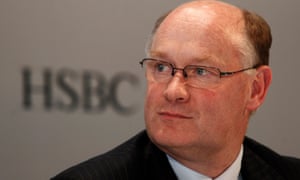
Douglas Flint, chairman of HSBC, said the bank was taking three years to move 1,000 roles within the UK to Birmingham. “Contemplating as a firm moving any number of people outside the country, setting up arrangements and getting licensed is a non-trivial task,” Flint told a House of Lords committee on financial services.

Before the vote, HSBC had said it could move 1,000 roles to Paris, and Flint had called for the UK to stay in a reformed European Union.

Sitting alongside him, Alex Wilmot-Sitwell, head of the European operations of Bank of America Merrill Lynch, warned that the two years to negotiate the UK’s exit from the EU after Article 50 is triggered was not long enough for firms to make changes to their business.

“The materials that are being moved are risky materials, and you don’t move nuclear waste in a race. You do it in a very carefully coordinated and managed process. The materials are perfectly safe, so long as they are properly handled and so long as the period of time to move them is suitable.”

It could take two to three years, said Wilmot-Sitwell. “It’s a multi-year process if it’s going to be completed safely and not going to risk financial stability,” he said.

Flint described London as an ecosystem which had provide a network of systems and regulation for efficient operations. “Dismantling that seems to be counterintuitive to anything that people have tried to do over the last eight years post-crisis.”

Were the City to lose the ability to clear trades in euros – as suggested by the French – Flint said “it would be very bad for the ecosystem” and “seriously damage” London.

But, he said, replicating all London’s financial services in another centre would not be achieved immediately. “I’m sure part of the discussion will be ‘you couldn’t replicate all of this in one place probably ever’,” said Flint. “There isn’t something that immediately replaces it.”

Wilmot-Sitwell said the financial services industry was not a Lego set that could be pulled apart without consequences for markets and customers.

UK interest rates are heading in only one direction

The economy has fared better than expected after the EU referendum but the Bank of England’s signal that rates could fall further means turbulence ahead

By chance, the Bank of England’s latest decision on interest rates fell on the eighth anniversary of the collapse of the US investment bank Lehman Brothers, one of the seismic economic events of the past 100 years.

On that day, official borrowing costs in the UK stood at 5%. In the months that followed the Bank of England’s monetary policy committee cut them aggressively until in early 2009 they hit 0.5%.

Nobody – not even the ultra-pessimists – imagined back then that in September 2016 the Bank would be considering cutting interest rates, from 0.25% to 0.1%. But the assumption that ultra-low interest rates were a passing phase proved to be entirely false.

The world economy has never truly recovered from the shock administered by the near-death of the banking system in late 2008, symbolised by the Lehman Brother’s bankruptcy. Growth has remained weak, real incomes have been squeezed, popular anger at ruling elites has grown. Donald Trump’s run at the US presidency and the Brexit vote can both be traced back to those tumultuous days eight years ago.

The possible implications of a British exit from the European Union explain why the Bank could well cut interest rates again before Christmas. As expected, the MPC kept rates unchanged at 0.25% at its latest meeting but sent out a strong signal to the markets that it was in the mood for further easing.

That’s despite the fact that the economy has performed rather better since the referendum than the Bank envisaged when it announced its big package of stimulus measures in early August. Back then, the MPC envisaged that the economy would grind to a virtual standstill in the third quarter. Now Threadneedle Street’s in-house economists think the initial stab at estimating activity from the Office for National Statistics will show growth of 0.2%, rising to 0.3% when more data comes in.

So why is another rate cut in the offing? Firstly, the Bank thinks some of the deleterious effects of Brexit – on investment in particular – will take time to show up. Secondly, it wants to keep downward pressure on the pound to boost exports. And finally, the prospect of still cheaper money has boosted financial markets and it fears a backlash if it fails to deliver.

That doesn’t mean rates at 0.1% are a dead cert. But it will take even better economic news over the coming weeks to prevent them from happening.

Former Barclays executive fights FCA over critical report

Regulator is trying to ban Andrew Tinney after accusation he suppressed report critical of bank’s wealth management arm

A former senior Barclays executive is fighting a move by the City regulator to ban him from holding a senior role after concluding he lacks integrity by suppressing a critical report about his division.

Andrew Tinney, global chief operating officer of Barclays Wealth and Investment Management until December 2012, was not personally criticised in the report, which found the division “pursued a course of revenue at all costs and had a culture that was high risk and actively hostile to compliance”.

The Financial Conduct Authority’s decision notice describes how Tinney discussed the report with his manager and then ensured it would not be seen by not sharing it with anyone, not entering it into the IT system, and instructing the consultancy which conducted the report that they did not need to circulate a copy.

The report into the US arm of the wealth division was produced at a time when Barclays was trying to overhaul its culture, the FCA said, following the Libor rigging scandal and a report it commissioned from lawyer Anthony Salz intended to clean up its approach to doing business.

The FCA said a senior Barclays executive received an anonymous email telling him of the existence of the report and that Tinney described the report as interview notes, rough notes and interview material when a request was made by the Federal Reserve Bank of New York for the “cultural audit” into the wealth division.

The FCA also said Tinney did not seek to suppress the report’s conclusions, and took steps to address some of the issues raised in the report. “The Authority considers that Mr Tinney did have legitimate concerns at the outset around the litigation risk and employment law consequences about the report being circulated,” the FCA said.

Tinney is taking the case to the upper tribunal and the FCA’s decision has no immediate effect. He said: “I do not accept that any of my actions can be construed as misconduct and I have referred that finding of the regulator to the upper tribunal. I look forward to finishing the job of clearing my good name in the upper tribunal.”

Barclays said it sold its Americas wealth and investment management arm to Stifel last year and said it was not the subject of the FCA investigation.

Justin Tomlinson apologises for leaking report details to Wonga – video

Justin Tomlinson apologises for leaking report details to Wonga – video

Wednesday, September 14, 2016

5 Delivery Services That Speak to Your Lazy Soul

5 Delivery Services That Speak to Your Lazy Soul

Delivery is a beautiful thing. You order, you pay, your item arrives. It's a novel idea that caters to your efficient side, or the core of your laziness. Regardless of why you love these services, it's hard to ignore how much they have improved our lives when we need them most (busy, don’t want to move from the coziness of the couch) by bringing our items right to us.

Here are five unique delivery services every [lazy] efficient person will love.

Postmates

Craving food from your favorite restaurant or need to pick up a few things from the store but don't feel like leaving your house? Postmates, a Web and mobile app, is a unique delivery service that gives you the freedom to get exactly what you want from stores and restaurants that don't have their own delivery service. Have a craving at 2 a.m. or need something important? Postmates is available 24 hours a day, every day, and allows customers to order everything from pizza and prescriptions to shoes and tech products and have them delivered in under an hour. Deliveries are made by couriers called Postmates, who travel by bike, scooter, car or truck, and the service charges a delivery fee that starts at $5 and varies based on the distance couriers have to travel, as well as a service fee of 9 percent of the purchase price of your items.

Drizly

Drizly is a business that can come in very handy if you're throwing a party and just realized you're out of alcohol, or if you're hosting a dinner and don't have enough wine. The app, which is available on Android devices, iPhones and the Web, allows customers to order items for delivery like wine, beer, liquor, mixers and garnishes; and party supplies like ice, plastic cups and bottle openers, so you can stock up without going anywhere. Simply order what you need, pay for it via the app or website and a driver will deliver your items in less than one hour. Drizly does not charge a markup on products, and you can even use the service to send booze as a gift and schedule deliveries up to 48 hours in advance. If you're in New York, there's no additional charge for delivery, but in other cities the service charges a $5 delivery fee. [5 Unique Businesses That Make Gift Giving Easier ]

Blue Apron

Now that you have the wine, it's time to create a balanced menu. If ordering food isn't your thing, Blue Apron will deliver fresh ingredients to your door weekly to create a delicious, healthy meal. Blue Apron offers a two-person for $59.94 per week plan and family-sized plan for $69.92. Meal options consist of Korean pork tacos, crispy salmon or spiced cauliflower among others, which change week-to-week. The website provides a detailed breakdown of the weekly menu. When you click on a specific menu item, it provides an itemized list of what you need, how to prep and videos on cooking the meal. According to the site, you can skip a week or cancel at any time with a week's notice, and delivery is always free.


Stitch Fix

Hate going to the mall and going shopping but aren't sure where to start when it comes to online shopping? Stitch Fix is here to assist men and women looking to be fashionable, without having to ever step foot in a mall. After signing up for the service, fill out a profile with your size, style, shape, budget and lifestyle. Next, choose a delivery date that best suits you. When your Stitch Fix Stylist selects your items, you will be charged a $20 styling fee, which will be credited toward anything you keep from your shipment. After you get your items, you have three days to try on the clothes, keep what you want and send back the rest. You're only charged for what you keep.

Washio

Whether you always forget to drop off your dry cleaning, don't have a washing machine in your home or just hate doing laundry, Washio can help. Washio is a dry cleaning and laundry service that will pick up your dirty laundry and deliver clean clothes to your door within 24 hours. The service is available on the Web and has an iPhone and Android app, and customers can have their laundry picked up any time from early morning to late at night (though the company does have a slightly longer turnaround for weekends, as the staff works reduced hours.) Simply select a 30-minute time window during which a Washio "ninja" will come pick up your laundry, as well as a delivery window for later. For your first order, Washio will give you bags for separating your items along with instructions, and the bags are yours to keep. Bonus: Your Washio ninja will bring you a cookie when he or she picks up your clothes.

Instacart

Instacart is a grocery delivery service that is perfect if you don't have time to go to the store yourself or can't get to the store for other reasons. You can shop online via the Web or mobile app at a variety of stores, from small local shops to big stores like Whole Foods and Costco, and Instacart will then connect you with a personal shopper who will pick up the items on your list and deliver them to your door in less than an hour. The service operates between 9 a.m. and midnight every day, though that can change depending on the operating hours of the store you order from. Instacart uses special tote bags that you can keep or return to your next personal shopper to be reused. If you're interested in trying out Instacart, you can get your first delivery for free when you sign up. You can also purchase Instacart gift cards for others, or sign up for the service's annual membership, Instacart Express. 

Tuesday, September 13, 2016

Juncker asks EU ethics panel to investigate Barroso's Goldman Sachs job

Move by European commission president reflects anger at his predecessor’s role advising US investment bank on Brexit

The president of the European commission, Jean-Claude Juncker, has launched an unprecedented investigation into whether his predecessor broke EU rules by taking a job at Goldman Sachs.

The EU executive has been under fire since it emerged in July that José Manuel Barroso, who led the European commission between 2004 and 2014, was advising the US investment bank on Brexit.

Barroso is now being asked to clarify his responsibilities at Goldman Sachs, according to a letter from Juncker to the EU ombudsman, Emily O’Reilly.

The case has also been referred to an independent panel of EU experts, charged with investigating breaches of the EU’s ethical code. The three-person panel is comprised of a former judge, a former vice-president of the European parliament and former top commission official.

Under EU rules, commission officials have a duty to “behave with integrity and discretion” once they have ceased to hold high office. As Juncker points out in his letter, this principle “has no time limit and is performed in all cases”.

The letter also puts Barroso in his place, noting that he will not be received in the EU institutions as a former president, but as an “interest representative”, who will be subject to the same rules as any other lobbyist. Although this line echoes earlier comments from commission officials, this is the first time that Juncker has made explicit the ban on red-carpet treatment.

Barroso, a student Maoist-turned centre-right prime minister of Portugal, took up the post of Brexit adviser at Goldman Sachs in July for an undisclosed sum. His decision to join the US investment bank, which was implicated in the Greek debt crisis, prompted fury among rank-and-file EU staffers. A petition initiated by EU employees attacking Barroso’s “morally reprehensible” behaviour, has attracted close to 140,000 signatures.

The anonymous group of EU staff, who plan to present their petition to Juncker at the end of this month, were angry that the commission hierarchy did not condemn Barroso’s bank job more forcefully.

Juncker has convened the ethics panel just days before a major speech on Wednesday, where he will attempt to steady an uncertain and divided EU, still reeling from the Brexit vote and split over its response to the migration crisis.

A spokesman for Goldman Sachs told the Wall Street Journal: “Goldman Sachs have adhered to all applicable legal rules and the highest ethical standards in [Barroso’s] appointment.”

Transparency campaigners called on Juncker to ensure the ethics panel convenes quickly with the aim of concluding its work within the next month.

Carl Dolan, director of Transparency International’s EU office, described the decision to call the ethics committee as “a small victory” for the thousands of EU citizens, including commission staff, that had signed the petition.

He added: “In a case that will have a huge impact on the commission’s integrity and reputation, the process needs to be swift and transparent. It’s imperative that the committee’s minutes, recommendations and the reasoning behind them are published as soon as possible.”