11 Holiday-Themed Business Ideas


There is a lot of fake news around on social media these days, but there is a specific reason why we cannot be 100% certain that the owner of Snapchat has filed for an initial public offering (IPO), or flotation. Regulations in the US allow companies with revenues of less than $1bn (£800m) to keep the process private in its early stages. Snap, as the parent is called, falls into that category, thus the plan to go public has not been announced, merely hinted at.
Hold on, you might say, if Snapchat isn’t even bringing in $1bn-a-year in revenue how can it possibly be worth the rumoured $20bn-$25bn? Well, quite. This IPO takes us back to a world of hype in which heroic assumptions are made about a social media newcomer’s ability to attract advertising dollars.
Last time it was Twitter, which was going to be the next Facebook until it became clear it wasn’t. Twitter’s shares were priced at $26 at IPO in 2013, zoomed as high $70, but are now $19. The problem with Twitter as a vehicle for advertisers is exactly as predicted: unlike Facebook, the medium is fast and furious and users tend to resent commercial intrusions.
Snapchat, which allows users to send disappearing messages from their smartphones, seems even less equipped to turn itself into an effective advertising billboard. Yet Wall Street seems similarly smitten by the statistic that Snapchat’s has 150 million daily users. It makes no sense. This is a four-year-old company with modest revenues (an estimated $350m for 2016) that is still creating its business model. Maybe it will be worth $20bn-$25bn if it can overcome the challenges – but the valuation would be absurd today.
It’s a strange sort of “exclusivity” deal that allows you to jump into bed with whoever takes your fancy. But Morrisons insists its tie-up with Amazon doesn’t infringe upon the contract it signed with Ocado. In the new “Morrisons at Amazon” operation, it is acting as a wholesaler supplying the US titan. By contrast, Morrisons is the customer in the arrangement whereby Ocado operates the morrisons.com website.
Confused? One assumes David Potts, Morrisons chief executive, had his lawyers check every possible wrinkle before signing with Amazon. If he is indeed on solid ground, one can understand why Ocado’s share price tumbled 8.5%. Life has become even trickier for the Hatfield-based technology whizzes.
Ocado still relies on one big supplier, Waitrose, for goods for its own online operation; but Waitrose operates a competing service and shows occasional signs of having itchy feet. Now Morrisons, the only firm to pay to use Ocado’s kit, is getting cuddly with Amazon.
On the plus side, “Morrisons at Amazon” seems aimed primarily at commuters who can’t be bothered to visit a shop on their way home and are willing to pay £6.99 to have their evening grub delivered within the hour. On the other hand, there is a free same-day offer for those prepared to wait a little longer and the range of Morrisons goods runs to “thousands” of lines. That, potentially, is more dangerous from Ocado’s point of view.
It is a trial, confined to “selected” postcodes in London and Hertfordshire, so could yet fizzle out. But it will probably make it harder for Ocado to sell its services to those overseas retailers it has been wooing for ages. None has signed so far and now Morrisons has invented a new online model for supermarkets – being a wholesaler to Amazon.
Mind you, Potts shouldn’t spend too much time congratulating himself on his own cleverness. The point about being a wholesaler is that you can’t dictate retail prices. If Amazon tries to undercut Morrisons on Morrisons-branded goods, he has a problem. There is also a moral for all supermarkets: the Amazonian beast is inventive and intends to hang around.
If freelance diplomat Nigel Farage wants to make himself properly useful maybe he could have a word with his American chums about Royal Bank of Scotland. The US Department for Justice will hit RBS with a fine of $5bn-$12bn, or possibly more, says James Leigh-Pemberton, head of the body that oversees the state’s stake in the bailed-out bank. The estimate tallies with the City’s guess of the penalty for mis-selling mortgage securities in the pre-crisis years.
Unfortunately, nobody’s diplomacy will make any difference. The justice department operates to its own rules and RBS is towards the back of the queue of miscreant banks, probably the worst place to be. The US banks settled first, for reasons that have never been explained.

In the Oscar-winning The Big Short, Steve Carell plays the angry Wall Street outsider who predicts (and hugely profits from) the great financial crash of 2007-08. He sees sub-prime mortgages rated triple-A but which, in reality, are junk – and bets billions against the banks holding them. In real life he is Steve Eisman, he is still on Wall Street, and he is still shorting stocks he thinks are going to plummet. And while he’s tight-lipped about which ones (unless you have $1m to spare for him to manage) it is evident he has one major target in mind: continental Europe’s banks – and Italy’s are probably the worst.
Why Italy? Because, he says, the banks there are stuffed with “non-performing loans” (NPLs). That’s jargon for loans handed out to companies and households where the borrower has fallen behind with repayments, or is barely paying at all. But the Italian banks have not written off these loans as duds, he says. Instead, billions upon billions are still on the books, written down as worth about 45% to 50% of their original value.
The big problem, says Eisman, is that they are not worth anywhere near that much. In The Big Short, Eisman’s staff head to Florida to speak to the owners of newly built homes bundled up in “mortgage-backed securities” rated as AAA by the investment banks. What they find are strippers with loans against multiple homes but almost no income, the mortgages arranged by sharp-suited brokers who know they won’t be repaid, and don’t care. Visiting the housing estates that these triple-A mortgages are secured against, they find foreclosures and dereliction.
In a mix of moral outrage at the banks – and investing acumen – Eisman and his colleagues bought as many “swaps” as possible to profit from the inevitable collapse of the mortgage-backed securities, making a $1bn profit along the way.
This time around, Eisman is not padding around the plains of Lombardy because he says the evidence is in plain sight. When financiers look to buy the NPLs off the Italian banks, they value the loans at what they are really worth – in other words, how many of the holders are really able to repay, and how much money will be recovered. What they find is that the NPLs should be valued at just 20% of their original price. Trouble is, if the Italian banks recognise their loans at their true value, it wipes out their capital, and they go bust overnight.
“Europe is screwed. You guys are still screwed,” says Eisman. “In the Italian system, the banks say they are worth 45-50 cents in the dollar. But the bid price is 20 cents. If they were to mark them down, they would be insolvent.”
Eisman is careful not to name any specific Italian bank. But fears about the solvency of the system – weighed down by an estimated €360bn in bad debts – are not new. In official “stress tests” of 51 major European banks in July by the European Banking Authority, Italy’s third largest bank, Banca Monte dei Paschi di Siena, emerged as the weakest. It triggered a rescue package – and soothing words from Italy’s finance minister, who said there was no generalised crisis in the banking system. But MPPS’s share price remains at just 25 cents, down more than 90% from two years ago.
How worried should British bank account (and shareholders) be? “I’m not really worried about England’s banks,” says Eisman. “They are in better shape than most in Europe.” When it comes to the US, Eisman’s outrage, so central to the plot of The Big Short, has melted away (just don’t start him on Household Finance Corporation, the HSBC-owned lender at the heart of sub-prime crisis). “I think the regulators did a horrendous, just horrendous job pre-crisis. But under the Fed, the banks have been enormously deleveraged and de-risked. There are no sub-prime mortgages any more... the European regulators have been much more lenient than the US regulators.”
Eisman was of the view that US banks were rather boring as an investment – although Donald Trump’s victory has changed that. “I have a feeling there could be a softening in the Department of Labor rules (an Obama-led crackdown on how banks sell financial products) and the regulatory environment has now changed in favour of the banks.”
Trump’s victory has sent the bond markets into disarray, with the yield on government bonds rising steeply. While this sounds good for savers – interest rates could rise – it is bad news for the holders of government bonds, which fall in value when the yield rises. Eisman sees that as another woe for Europe’s banks, who hold vast amounts of “sovereign bonds”.
“What is very negative is that in every country in Europe, the largest owner of that country’s sovereign bonds are that country’s banks,” he says. As the bonds decline in value, then the capital base of the banks deteriorates.
He doesn’t share the optimism around Deutsche Bank since Trump’s victory. The troubled German bank, facing a $14bn fine in the US for mortgage bond mis-selling, was for a long time one of the biggest lenders to the Trump business empire. In the three days after Trump’s victory, shares in Deutsche Bank, regarded as Europe’s most systemically important bank, jumped by a fifth from €12.90 to €15.30 as traders bet on Trump-inspired leniency over the fine.
But Eisman doesn’t buy it. By his reckoning, Deutsche Bank was less fundamentally profitable than its rivals, and relied more on leverage to boost earnings. His analysis suggests it will struggle to return to its former profitability.
Critics will point out that shorting the likes of Banca Monte dei Paschi di Siena or Deutsche Bank sounds fine – except that the share price of both have already fallen so dramatically the bad news is already in the price. But we don’t know for sure if they are Eisman’s precise targets – because he’s not willing to say unless you give him at least $1m to manage in one of his “personal accounts”.
Eisman now effectively runs his own “boutique” operation within a bigger Wall Street firm, Neuberger Berman. His “Eisman Long/Short SMA” account has opened to wealthy investors, and in January he will be in London drumming up interest among investors.
But not everything Eisman touches turns to gold. He declines to say how much he made during the financial crash, when he was manager of funds at FrontPoint Financial Services, though it was reportedly as much as $1bn. But in 2010 FrontPoint ran into trouble after one of its manager pleaded guilty to insider trading and was given a five-year prison sentence.
Eisman later set up a hedge fund, Emrys Partners, gathering nearly $200m from investors, but its returns were relatively humdrum compared to the drama of the great crash, making 3.6% in 2012 and 10.8% in 2013, according to the Wall Street Journal.
Did he think the film accurately portrayed what went on? He visited the set, and gave Carell and the other actors (Brad Pitt and Christian Bale also starred) advice and notes.
“When I saw the film, I thought it was great and that Steve Carell was wonderful. But I thought, hey, I wasn’t that angry. After the crash I was interviewed by the Federal Crisis Inquiry Commission, and I saw a transcription later on. After reading it, I realised that ‘yes’, I really was that angry... but the Fed has done a very good job since.”

I don’t do it for the money. I’ve got more money than I’ll ever need. Some of it yours. Let’s face it, you don’t file for bankruptcy six times if you’re planning on paying your dues. The key to making the best deal is to let others take the hit. I do it because I can. If you can get away with losing over $1bn on a deal, you’d have to be a schmuck not to. There’s no way that Donald J Trump is ever going to let himself be one of those deadbeat Americans with no hope and no prospects. No sir. And that’s why we’re shamelessly republishing this load of tosh from 1987. Here’s a diary of a typical Trump week.
Monday 9am. Call my broker, Alan Greenberg, to buy $25m worth of stock in Holiday Inns. I sense it’s undervalued. As we speak, its value increases to $30m. My cock goes hard and I decide to sell.
Tuesday 3pm. Try to evict Carly Simon and Mia Farrow from their rent-controlled apartments, but both want to play hardball. Their loss. When you do battle with the Trumpster, there’s only one winner.
Wednesday 1pm. Lunch with Ivana. Try to grope her pussy. Probably not the best time to tell her about Melania.
Thursday 5pm. Some kid at the door says he’s my son. Tell him to come back when he’s made his first $10m.
Friday 10am. The banks foreclose on Trump Taj Mahal casino putting thousands of people out of work. But at least I come away with $50m. My cock goes hard again.
My style of dealing is quite straightforward: 1) Get as much as you can for yourself; 2) There’s always somebody stupider than you out there; 3) Any attention is better than none; 4) Promise people the Earth even if you know you can never deliver; 5) Get yourself a top haircut.
The most important influence on me when I was growing up was my father, Fred Trump. He taught me everything I needed to know about making money. If he had a fault, it was that he was not narcissistic enough. Fred never named a tower after himself. He also wasted too much time buying properties for deadbeats. If there’s one thing I’ve learned from real estate, it’s that poor people on zero-hours contracts just don’t know how to look after themselves.
My first deal in Cincinnati taught me that lesson. Having persuaded the banks to lend me the money, I put the day-to-day management of the rebuild in charge of a man I knew to be a conman. I figured he would con the contractors far more than he would con me, so I would end up ahead on the deal. No flies on the Don! Though I was glad to sell the houses off for a $10m profit before the market crashed.
In 1974, I moved into the New York property market when I bought the Commodore Hotel near Grand Central Station. It was rundown and operating at a loss and everyone thought it was a turkey, but I could immediately see its potential. As usual, I was proved 100% right and made $280m in an afternoon after renaming the hotel Trump Plaza.
I then built Trump Tower after buying a department store whose owner didn’t understand its true worth. That project taught me that most politicians are just in the game for themselves. It’s a mentality I just can’t understand. With Trump Tower, I was determined to build as big as possible and the results speak for themselves. I have my own apartment on the top three floors and employ some limey called Nigel Farage as my lift attendant. It could be worse. I could have had Piers Morgan working for me. Can you believe that man? I met him once for five minutes on a reality game show and he hasn’t stopped going on about it ever since. The guy must have nearly as big a personality disorder as me.
After Trump Tower came Trump Castle, Trump Palace, Trump Island, Trump White House and Trump Great Wall of Trump. Basically, it was the same deal every time. I was fabulously brilliant and made a huge amount of money for myself while everybody else lost big time. I was living the American dream. Bankrupt one day, rich the next. But my biggest success is the 120-storey Trump Toilet that can flush every Muslim, Mexican and gay back into the sewers where they belong. It might even come in useful for this book.
Digested read, digested: The American nightmare.

On the night Donald Trump was elected the next US president, one of his fellow nationalist populist politicians chose to implement chaos in a land not famed for order. In a surprise TV address Narendra Modi, the Indian prime minister, announced that all 500- and 1,000-rupee notes would be withdrawn immediately from circulation. At a stroke Mr Modi rendered 86% of currency worthless outside a bank branch. Old notes would have to be exchanged for limited supplies of new currency. It was justified as a move designed to fight corruption and target people who have been dodging taxes by holding stockpiles of cash, known in India as “black money”.
Many initially saw the withdrawal of banknotes as a price worth paying to eliminate graft. The short-term impact of “demonetisation” has been dramatic: the $2 trillion Indian economy will shrink. The rich will not suffer, as corruptly acquired fortunes have almost all been converted to shares, gold and real estate. But the poor, who make up the bulk of the nation’s 1.3 billion people, will lose out. They don’t generally have bank accounts and are often paid in cash. For them, getting to a bank and queueing for hours will cost money and time they don’t have. In less than a week the policy has reportedly claimed more than a dozen lives. The government says that it will take weeks to sort out the problems.
Demonitisation is not new in India, which last tried it in a smaller way in 1978. The result then was higher bank deposits and a bump in the tax take. Yet the scale and speed of Mr Modi’s scheme has more in common with the failed experiments of dictatorships which led to runaway inflation, currency collapse and mass protests. While Mr Modi campaigned to end corruption, it would have been better if the government had updated its antiquated tax system to realise such a task.
But slower, incremental reforms do not make headlines. They do not instantly hit the war chests of political rivals in upcoming state polls. Mr Modi, a Hindu nationalist, was for a decade an international pariah over his alleged role in the mass murder of Muslims in a region he once administered. He wants to be known for something else. President-elect Trump offers an opportunity to recast himself. Two years ago Mr Trump’s svengali, Steve Bannon, described Mr Modi’s victory as part of a “global revolt”. But a looming cash crunch and an administrative crisis makes it look like the revolt might start at home.
• Comments will remain closed on this article

Two US banks – Citi and JP Morgan – have been designated as potentially posing the greatest risks to the global financial system in an annual ranking by regulators.
Citi has replaced HSBC and joined JP Morgan in the highest ranking issued by the Financial Stability Board (FSB), an international alliance of central bankers, policy makers and regulators that sorts 30 major banks into five categories.
The more systemically important the bank, the more capital it must hold to absorb losses during time of crisis. No bank has ever been placed in the highest, fifth category – which adds 3.5 percentage points to a bank’s capital requirement – since the FSB rankings were introduced five years. Citi and JP Morgan are in the fourth category.
HSBC, Britain’s biggest bank, has been moved out of the fourth category for the first time to the third, reducing the top up to its capital by half a percentage point to 2%. Barclays has also had its status cut by one category, from the third to the less risky second bracket.
Citi is among three US banks which have been pushed up the rankings: the other two are Bank of America and Wells Fargo. The rising importance of Chinese banks is also illustrated as Industrial and Commercial Bank of China has moved up one ranking.
Tomas Kinmonth, a fixed income strategist at ABN Amro, said the changes reflected the revised business models of some of the banks. “The European and UK banks are both retrenching and are trying to return to their core businesses. Thus the lowering of Barclays within the ranking comes partly as the bank moves to focus just on the American and European markets,” said Kinmonth.
“Counterintuitively, a decrease in the systematic importance of the banks can actually be a positive for the institution. The bank can be expected to have less equity set aside, and can in theory allow them to return more proceeds to existing shareholders,” he said.
HSBC has also been scaling back its global presence – it recently sold its operations in Brazil – and also reducing its exposure to risky loans.
Deutsche Bank, which was described by the International Monetary Fund as the world’s riskiest bank, remained in the third category – where HSBC, Bank of America and French bank BNP Paribas also reside – requiring it to top up its capital by two percentage points. Deutsche was in the fourth category in 2012.
The FSB is chaired by Bank of England governor Mark Carney. Its role is to act a body coordinating policy towards the financial services sector around the world and monitor and assess vulnerabilities affecting the global financial system.
It is playing a key role in trying to end the “too big too fail” problem that was highlighted by the 2008 banking crisis. Assessing the so-called globally systemic banks – known as “G-Sibs” – is part of its role.
The banks are unlikely to need to raise more capital as many of them ready hold enough to appease regulatory demands. A list of the globally systemic insurers was also published, which includes Prudential and Aviva.

While contactless payment terminals have become ubiquitous in retail outlets, Barclays is set to trial contactless ATMs in a number of its branches.
The bank will unveil 100 contactless machines at 25 branches across “the north”, which will allow customers to withdraw up to £100 without putting their card into the machine, or by using their smartphone instead. The exact locations of the machines have not yet been released, but the bank said they would be rolled out to 180 branches across the UK if the project was a success.
ATM users will simply tap their contactless card against the machine’s reader before inputting their pin as normal. Barclays mobile app customers who have one of the latest Android mobile phones with NFC (near-field communication) won’t even need their card – once they open the app and select cash withdrawal they simply tap the phone on the card reader, input their card’s pin either on the ATM or the phone handset, and out pops the money.
Customers with iPhones won’t be able to use the scheme because Apple limits the use of its contactless technology to its own Apple Pay system.
Barclays suggested the facility was more secure than inserting a bank card, as it avoided the risk of having the card’s details hijacked by a skimming machine. The user also cannot walk off and leave their card in the slot.
Those taking out sums greater than £100 will still have to put their card in the machine.
Barclays is not the first bank to allow customers to make cardless withdrawals. Royal Bank of Scotland introduced its Get Cash facility four years ago, designed to help customers in an emergency. It allowed up to £130 to be taken out of an ATM by messaging the user a code via their smartphone which was to be typed into the terminal. However, this service was suspended in 2012 after it was targeted by fraudsters.
Security experts have warned that users of the mobile app are probably better off inputting the card’s pin number on the ATM rather than mobile handset. “There could be malware on your phone which is recording the pin as it’s typed in – that would be a new risk,” said Steven Murdoch of University College London. “The malware might also be able to copy your credentials from one phone to another, allowing the other handset to make a withdrawal.”
Last year, more than 90,000 UK bank accounts were defrauded through the use of counterfeit cards, and a further 152,727 because of lost or stolen cards, according to Financial Fraud Action UK.
Ashok Vaswani, chief executive of Barclays UK, said: “Our customers now expect to be able to use their smartphone to make their everyday purchases. We want taking out cash to be just as easy. With Contactless Cash, customers can quickly and securely take out money with just a tap of their smartphone – a first for the UK.”

Executives in Australia’s major banks ought to be sacked and publicly named for significant regulatory breaches, according to new parliamentary report.
Australia should also establish a “one-stop” tribunal to make it easier for consumers and small businesses to complain about poor treatment by banks and financial advisers, it says.
But it has stopped short of recommending a royal commission into the banking industry.
Those are some of the recommendations from a parliamentary inquiry into Australia’s major banks, whose first report was published on Thursday.
The Turnbull government set up the inquiry in response to mounting pressure for a royal commission into the banking industry.
Chief executives from Westpac, ANZ, Commonwealth Bank, and NAB, were forced to appear before a parliamentary committee in Canberra last month as part of the inquiry.
The report’s recommendations include:
The committee chair, Liberal MP David Coleman, said if the recommendations were implemented they would substantially improve the banking sector.
Coleman said this first report would be added to in the future. “Banks must be much more accountable to consumers than they are today, and these recommendations will achieve that goal,” he said on Thursday.
But Labor and the Greens have issued dissenting reports. “This inquiry was established by the government to avoid a royal commission into Australia’s banking industry,” Labor’s report says.
“It has been a stage-managed circus from its beginnings … the only way to achieve any form of justice for the victims of the banks, and the only way to truly shine a light on the practices that drive unethical behaviour in the banking industry, is to hold a royal commission.”
The Greens said the inquiry confirmed the big four banks “enjoy a cosy and privileged position in Australian society”.
“This inquiry has also confirmed the big four banks think there is nothing wrong with the core of their vertically integrated business model, a model that creates a potential for conflict of interest between the customers’ best interest and subsidiaries encouraging people to buy financial products,” the Greens’ report says.
“[It] has generated more questions than answers, reinforcing the need for a wide-ranging royal commission into the big four banks and the broader financial sector.”
Coleman said chief executives of the major banks would be asked to attend another round of public hearings in February 2017.

As winter fast approaches, there are plenty of seasonal businesses that are gearing up for the year's end. Some specialize in snow removal, while others create powder for the warmer slopes; other businesses will help you store your summer garments or decorate your home for the holidays. These five winter businesses will help you get into the holiday spirit, weather the coming snowstorms, and maybe even inspire you to start a business of your own.
For snowbirds and the environmentally conscious alike, winterizing homes during the colder months is always in high demand. When people leave their homes for winter, it's important they prepare their plumbing systems for the cold: turning off the utilities, draining pipes and introducing anti-freeze to the system. This ensures that pipes won't freeze or burst and that homeowners will avoid astronomical energy costs during their time away. Of course, winterizing a home means there's always a need to de-winterize too. This is an invaluable service, especially in areas where many people flock to greener pastures after the first frost.
When winter's on its way, many people try to save space by storing their summer clothes, decorations and other items they don't need in the cold weather. But if you live in an apartment or home that doesn't have a lot of storage space, organizing for the season can get a little tricky. You can use a storage facility if you don't have the space in your home, but what if you don't have a car to travel back and forth, or the time to go to a storage unit every time you need something? Some businesses could take the hassle out of storing those warmer weather items. Services that pack, move, and store items -- and return specific goods on demand -- are highly sought after during the winter months, especially in densely populated cities.
Whether you love winter or hate it, everyone can agree that dealing with a snow-covered driveway is a huge hassle. Shoveling and plowing is difficult, and if you're elderly or disabled, it's even harder to deal with these tasks. If you find yourself dealing with a snowed-in car, a snow removal service can help. Starting a snow removal service isn't hard; in fact, many children walk door to door as an informal snow removal service. But as adults, we're well positioned to take advantage of the demand for a top notch snow removal service. Consider creating a smartphone application to help dispatch workers to the work site, making the customers experience simple, efficient, and effortless!
'Tis the season to decorate your home for the holidays, but if you're too busy or otherwise unable to hang lights or even decorate a tree, it could leave you feeling less than festive. A decorating service can help you get into the holiday spirit by decorating your home for you. And who says decorating services have to be confined just to winter? While the holidays are in full swing at the year's end, why not offer decorating services year round? Birthdays, St. Patrick's Day, and Independence Day are all opportunities to stretch your decorating business beyond the throes of the winter holiday season!
If you live somewhere that's not exactly known for snowy winters, a snow creation service can help you create your own winter wonderland. These companies specialize in making realistic fake snow, as well as real snow that lasts for a longer period of time and can even be used for snowball fights in the middle of summer! Snow creation services can be used for everything from film sets and corporate events to winter-themed weddings and children's parties. Take decorating to the next level, or just throw a fabulous winter wonderland party. In those warmer climates, everybody would be excited to see a little bit of snow for the holidays!

Thanks to online marketplaces and the many shoppers looking to buy products over the web, selling online is easier than ever. One of the possible avenues for entrepreneurs, especially those looking for a design-oriented or artistic business, is the T-shirt market.
If you're an entrepreneur looking to start an online T-shirt business, you could purchase an expensive T-shirt printer or screen printing equipment. But you don't have to; you can get your business off the ground with minimal startup capital — as low as $50, according to some experts. Compared to other types of startups, an online T-shirt company is low-priced and simple to launch, and you don't even have to manage order fulfillment.
Your t-shirts can contain simple words, fully printed designs or a combination of both. Adobe Illustrator or Photoshop can be great tools to help you create your designs. Adobe offers low-priced monthly subscriptions; Adobe single apps are available for $19.99 per month. Adobe and online education companies such as Lynda.com offer a wide variety of Adobe classes to help you develop your design skills.
If you have ideas but don't have the skills to produce your designs, you may find affordable graphic-design freelancers through sites such as Guru, Fiverr and Upwork. Rates are often affordable and negotiable. If you want to start designing without Photoshop, T-Shirt Magazine contributor Ana Gonzalez recommended Placeit, which offers clothing mock-ups for as little as $29 per month for nine images.
Whatever your idea is, do your best to make sure you are not infringing on another designer's ideas. You can do this by conducting an online search of trademark databases like U.S. Patent and Trademark Office and/or hiring a patent lawyer to help you determine whether your design is similar to one that has been copyrighted or trademarked. [See Related Story: How to Start a Clothing Line]
Printing equipment can be expensive and requires you to purchase inventory. You may ultimately want to do your own printing, but when you are first starting out, you can use an on-demand T-shirt printing company, such as Printful, Print Aura, Scalable Press, Teespring and Amplifier — all you need to do is submit your designs and they'll take care of the rest. Many printers, including these five, offer order fulfillment services, so you never have to worry about inventory and shipping.
Most of these types of services offer features specifically for small businesses, including no minimum purchases, no inventory requirements, no monthly fees, volume discounts and mock-up generators. Based on our research, other factors to consider when choosing a printer include t-shirt selection (colors, sizes, styles), print quality, turnaround time, cost, integrations with e-commerce platforms and return policies.
You can easily create an e-commerce website using a service such as Shopify, WooCommerce, Etsy, Square Space, Big Cartel or Amazon. Many of these services will allow you to use your own domain for an additional cost, and many will work with the print company of your choice. You'll want to verify how well the printer works with your website or shopping site technology before you purchase.
Besides the basic business website standards like your company logo, product listings and contact information, you'll also want to include specifics such as sizing charges and fit information. Your customers will want to see detailed color variations as well. When you are first starting out, you'll likely just start with T-shirt mock-ups and then evolve to real-life images using models as you grow.
Lindsay Craig, a social growth expert at Spaces, a website builder offered by Shopify, said most of the initial planning and creation process of starting a T-shirt business is free. The first expense you may incur is buying your custom domain. Google charges $12 per year for a domain, Square Space is $20 and Shopify starts at $13 per year. Using Shopify's Spaces, you can build an online shop for free and then upgrade it starting for $4 per month.
Craig suggested you start with three to five T-shirt designs. If you are not a designer, you can use royalty-free fonts from 1001 Fonts and low-priced artwork from The Noun Project to get started. T-shirt templates are available so you can create realistic images of your designs rather easily. If you do not have access to Adobe Creative Suite, you can start using free applications such as GIMP to create your designs.
Once you have some designs created, you'll want to order some sample product so you can see the quality of the shirt and printing. Craig noted that is one of the larger expenses and will cost you around $20. All of those expenses add up to less than $50. However, keep in mind that you'll need to purchase a business license, and prices for those vary greatly depending on your area.
When you are first starting out, you won't need much. Minimal sales are simple to track using a free spreadsheet such as Google Sheets. But as your business grows, you may want to consider a few additional solutions. Here are a few good ones to try:
The texts began arriving on customers’ phones over the weekend: Tesco Bank had spotted unusual activity on a significant number of current accounts, and was getting in touch with customers to alert them. But that wasn’t enough to prevent £2.5m being siphoned out of about 9,000 accounts, and transferred to criminals whose identities and locations remain a mystery.
The damage to the bank’s reputation may be significant – but more significant still is that the attack is only the latest, and presently most visible, example of a rising tide of onslaughts against online banking, which seek to exploit any weak spot in web-facing computer systems and their users.
The hackers’ motives are straightforward. As the wild west bank robber Willie Sutton explained when asked to explain his motivation: “That’s where the money is.”
And experts warn that 2016, which has already seen an audacious attempt to steal £763m ($951m) electronically from Bangladesh’s central bank in the spring, is the precursor for much worse to come.
“Because a lot of economies aren’t in good shape, you’ll see more and more skilled computing people being out of work, and turning to the dark side where they work for criminals,” says Ilia Kolochenko, chief executive of High-Tech Bridge, a web security company. “And at the same time you’ve got a lot of companies trying to optimise their costs, and preferring to save money on the cyber side. It’s hard to predict how successful and how large the scale will be, but I’m pretty sure it will get worse.”
The Bangladesh attack occurred in February, when hackers broke into the Swift network, the international financial transfer information system, and told the Federal Reserve Bank of New York to make 32 transactions totalling $951m to accounts around the world. Although only $101m, in two transactions, was paid out, a total of $63m has not been recovered. Swift has since warned banks to update their software.
It is highly unlikely that the same group was behind the Tesco Bank attack; the amounts involved – and number of accounts – are so different as to imply separate operations. However, this suggests that various gangs are trying to break into banks and accounts online. There have certainly been a number of online raids – some involving big money. In 2013, online security company Kaspersky said that as much as $900m had been stolen from 100 banks after their internal systems were infected with malware.
And in late 2015, the UK’s National Crime Agency investigated the theft of £20m from several accounts, enabled by malware which had infiltrated customers’ PCs.
There are suspicions that Tesco Bank’s security model was more vulnerable to compromise than it should have been: once logged in to a current account, a user could set up a transfer to a current account in another bank without having to get an SMS confirmation. The question, still unanswered, is how the accounts were targeted.
It is possible that the hackers found a weakness in the back-office systems – possibly from a current or former employee, suggests Kolochenko.
Tesco Bank declined to discuss whether there are any patterns in the accounts that were targeted: “This is a criminal matter, and so we are constrained in what we can say,” a spokesman said. He declined to say whether any criminals had been identified or what lines of investigation were being pursued.
Andrew Bailey, chief executive of the Financial Conduct Authority (FCA), told MPs last week that “there are elements of this [attack] that look unprecedented”, but did not elucidate.
What parts are unprecedented? The fraud was far from the largest conducted on a UK bank; in September, the23-year-old head of a fraud ring, Feezan Hameed, was jailed for 11 years, after his gang stole £113m from British banks. They fooled people into thinking they were talking to their bank, and got them to hand over their internet details – which he would then use to get access to their accounts. Only £47m has been recovered.
So if the FCA’s Bailey is worried, it must be about the online nature and the scale of the attack – not its value. And this is the concern: if criminals can compromise 9,000 accounts in a matter of hours during a weekend and siphon off an average of £280 from each one before being spotted, what’s to prevent it being done to an even greater number of accounts for greater amounts of money, and leaving banks to pick up the pieces? What’s to stop it being done to any bank every night?
The idea of banks building up a false sense of security before a disaster might sound familiar. Simon Moores, an independent consultant on security, likens the situation now to the US financial market in 2006/7, when complacency over the inherent risks of mortgage-based products was compounded by ratings agencies which had an interest in certifying sketchy financial instruments as safe. “It’s just like The Big Short,” Moores says, referring to the film and book about the lead-up to the financial collapse, which was forecast by only a few. “The computer security industry is worth £30bn, but it doesn’t work any more. Having a box to protect your bank website or business doesn’t work. But nobody is prepared to accept the fact.”
Banks don’t like discussing hacks; more than 100 banks are reckoned to have had up to $900m stolen in late 2013, according to security company Kaspersky. The hackers compromised internal computers and used video feeds for months to learn daily routines.
Moores points out that 2015 was a record year for cyber-attacks globally – but that’s only because 2016 hasn’t finished yet. Malware – which tries to attack PCs or corporate systems – is on the rise: “There are now thought to be more than 500 million worms, Trojans and other viruses in circulation, and reportedly every day there’s another 1.25 million ‘polymorphic’ threats [which change as they are copied between machines, making identification harder].”
For banks, the attraction of online banking is clear: it doesn’t require expensive offices in high streets, or the employment of thousands of tellers who might be vulnerable to criminals through blackmail or greed. Instead, it relies on computers, and a relatively small and highly trained (and well-paid) staff, while the customer-support function normally done by tellers can be outsourced to call centres that have little more access than ordinary customers to the banks’ databases.
For the customer, online banking should mean greater convenience – it can be done anywhere and any time you can get an internet connection – and reliability, since the challenges (such as passwords and memorable words or phrases) you face to log on successfully are more complex than a simple four-digit number at a cash machine.
But for both, inserting a computer between the customer and the bank has opened up new risks from malware targeting web browsers, computers and mobile phones. Browsers, software and computers – both the customers’ and the banks’ – can have mysterious bugs which allow access to hackers and leave almost no trace; there is a constant need for bug-finding and updates to defeat them.
Even while banks strengthen their software, though, the weak link can lie outside. One of the biggest problems for online banking was the malware Zeus, which defeated many antivirus packages. First seen in 2007, it lurked in the background of Windows computers infected via email attachments or web pages and captured logon passwords and account numbers. By 2010, it had infected nearly 4m PCs.
In April two men – a 27-year-old Russian called Aleksandr Andreevich Panin and an Algerian accomplice, Hamza Bendelladj, were given prison sentences totalling more than 24 years for their role in creating and running a “botnet” of infected computers called SpyEye, which relied on Zeus and had stolen more than $100m from US banks and, by extension, their customers. By 2011, there were versions of Zeus that infected smartphones running on Google’s Android, putting banking apps at risk.
So far though, banks appear to have managed to stay ahead in the arms race; the growth in the use of smartphones may actually have helped, because their security model is generally better than PCs, holding apps in deeper “silos”.
Customers have often borne the cost of the skirmishes, though. Ross Anderson, professor of security engineering at Cambridge University’s computer security group, has clashed with the UK’s financial instutions for more than a decade, first over weaknesses in cash-machine security and more recently over banks’ reluctance to accept the cost of online fraud, while they reap the profits of lower online overheads.
Customers who have been defrauded often have to fight for their refunds, Anderson says. Many of those whose money was stolen by Hameed are still trying to get their money back, he points out.
“As long as UK banks don’t have to bear the cost of fraud, they won’t have an incentive to improve their security,” he says.
He notes that the Tesco case – in which refunds were immediate – was a rare and welcome exception. He notes too, that being able to transfer money more quickly has brought significant problems.
“In the old days, if you wanted to send £1,000 to your aunt in Australia, it would cost you £30 and take four days and you might have to visit the branch. Now it can be set up and sent in seconds. If you’re a fraud victim, you can’t stop it.”
It might sound strange for a computer security expert to bemoan faster payments. But the problem is more one of imperfect authentication: clearly, something failed at Tesco. Because thousands of customers were affected by the attack, Tesco paid up; but when a single person or business is hit by Zeus or another variant, banks often dispute it.
Anderson says: “They shouldn’t design systems for perfect humans who can recall dozens of passwords. They should design for people as they are, faults and all.”
Moores says the threat to the users, and the banks, will only increase. “The attacks are going to get automated, and they’re going to recruit machine learning – that stuff’s not just for Google.”
Banks don’t like to talk about online hacking, especially when it involves customer accounts. But here are some that we know of.
2013 As many as 100 banks worldwide are discovered to have been infiltrated by malware – sent as email attachments to bank employees – which sent back video and other data from internal networks. That helped hackers to steal a total of $900m, according to the Kaspersky Lab, which claims it had gone on for almost two years. Neither the amounts stolen nor the details have been confirmed.
December 2014 About 730,000 login details for wealthy clients of Morgan Stanley are offered for sale online, after being stolen by an employee, 30-year-old Galen Marsh, between 2011 and 2014. Morgan Stanley says it found no evidence that customers lost any money. Marsh pleaded guilty in September 2015, receiving 36 months’ probation. Morgan Stanley was fined $1m.
Meanwhile, hackers in Russia and Ukraine break into the internal networks at financial institutions in their countries and infect ATMs with malware that would give them 50 times the amount they seemed to be taking out. The group is reckoned to have gained access by buying access to PCs already infected by opportunistic hackers using weaknesses in Microsoft Office and Windows.
January 2015 Hackers acquire codes from Swift, the international financial network which enables transfers between banks, to get access to a bank in Ecuador, Banco del Austro, and transfer $12m out of it via Wells Fargo to banks in Hong Kong, Los Angeles and Dubai. The bank sues Wells Fargo but does not tell Swift, which only learns of the incident via a lawsuit in May 2016.
April 2015 Ryanair confirms that £3.3m has been stolen from it by a fraudulent transfer via a Chinese bank. Neither the bank nor Ryanair offers any information about how the fraud happened.
Late 2015 The UK’s National Crime Agency investigates a series of bank frauds enabled by malware called Dridex, which infects PCs and harvests online banking details from users. British accounts are reckoned to have had £20m taken from them and paid to accounts in eastern Europe.
February 2016 $81m is stolen from Bangladesh’s central bank; investigators link the malware used to break into the systems to that used to penetrate Sony Pictures in 2014 by a hacking group called Lazarus. The hackers had sought to transfer $1bn, but a fault in their code halted the transaction early.
May 2016 Swift says a Vietnamese bank has been hacked, but doesn’t disclose whether any money was lost, or which bank is involved. It urges its members, numbering more than 9,000, to keep their software up to date.
June 2016 $10m is stolen from a bank in Ukraine after the Swift system is exploited using a method similar to that used against the Bangladesh central bank in February.
November 2016 Tesco Bank says £2.5m has been stolen over the weekend of 5-6 November from the accounts of about 9,000 customers, out of a total of 136,000. All have been refunded; questions remain about how the transfers were made. Tesco could face a substantial fine from regulators.
Current account customers at Tesco Bank have had online payments frozen after tens of thousands of accounts were attacked by fraudsters.
The bank said suspicious transactions had been spotted on around 40,000 accounts, and that money was taken from around 20,000 customers. Many account holders reported losing hundreds of pounds, with one customer telling the Guardian that more than £2,400 had been taken. Tesco Bank will not say how much money is involved in total.
The bank says it fell victim to online criminal activity. Tesco spotted suspicious activity on accounts on Saturday evening and texted customers who had been affected. Several people have reported that their accounts show transactions made overseas, such as in Spain and Brazil. A criminal investigation has been launched.
Tesco has not given any details, but technology specialists have speculated on what might have happened. Cliff Moyce, global head of financial services at technology firm DataArt, said the chance of the problem being cause by a “remote technical hack” was less than 50%. “Far more likely is the (in)action of a human actor, or weak process/management controls when information is shared between providers,” he said.
Moyce said Tesco would need to investigate the possibility of an “economic hack” in which an offshore employee is offered a large sum of money in return for a tranche of customer data. “But incompetence rather than ill intent from an employee or subcontractor remains the more likely factor to be correlated with the malintent of the criminals,” he said.
Ed Macnair, chief executive of cloud security company CensorNet, agreed that a remote attack was unlikely. “People are the weakest link for most organisations, and I would not be at all surprised if that’s the case here,” he said. “It’s pretty hard to remotely hack into a network without some sort of assistance – which is often provided accidentally. People tend to do stupid things, like reusing passwords or clicking on random links, giving hackers the access they need.”
Moyce suggests that the hack was timed for the weekend when banks have reduced staff and the response time will have been slower than during the week. “Automated fraud detection systems appear to have worked well, but a lack of people at desks will not have helped,” he said.
An investigation by the National Crime Agency is under way. For customers, the bank says it plans to return to normal service as soon as possible. It has said that all direct debits and bill payments will go through as usual, and people can still withdraw cash and use their debit cards. Customers should also still be able to log in to online banking and check their accounts.
But there will be some disruption – those affected can still use their debit cards, but will be sent new ones within seven to 10 days.
Tesco Bank has told customers that it will refund accounts as soon as possible, hopefully on Monday, and cover any financial loss that they have suffered as a result of the fraud. For some customers who have paid penalties to other organisations, perhaps because of missed payments, this may mean providing proof to Tesco of those losses.
As well as keeping an eye on their account, the chief executive of Get Safe Online, Tony Neate, said they should change their passwords immediately.
“We’d also strongly advise people to change the security question they get when forgetting their passwords, as these answers may have been compromised as a result of this breach,” he said. “We would also suggest that Tesco customers look at any other online accounts they currently have to make sure that no suspicious activity has been taking place – particularly if you have used the same login details, which is something you should never do.”
Although not directly linked to their Tesco Bank account, Neate said cyber criminals may have been able to gain access to personal information which could potentially help them unlock other online accounts.
Tesco Bank offers a competitive current account: it is paying 3% interest on balances of up to £3,000. This may be enough to keep and attract some people. Previously, RBS managed to keep hold of customers after IT problems that went on for weeks.
Others may decide to go elsewhere. On Twitter some said they would be off. One customer said this was not the first time it had happened, and that it was “Time to move to a secure bank”.
Two years ago the Bank of England warned that banks were not taking the threat of cyber-attacks seriously enough, and experts have warned that they could fall victim to different types of fraud. But so far there have been no other attacks on the scale of that reported by Tesco.
In January, HSBC customers were locked out of online banking after the company was targeted in a “denial of service” attack. This brought down the website, but there were no reports of any losses to customers following the attack.
Macnair said banks could take some precautions. “The safest thing for organisations to do is simply restrict access to anything employees don’t need in order to do their day-to-day jobs,” he said. “That will at least confine any damage and prevent hackers roaming the network unchecked.”
Lloyds Banking Group is cutting 665 jobs and closing 49 branches as it continues to cut costs in an attempt to complete its return to the private sector.
To cushion the blow of further branch closures, the bank – bailed out in 2008 – is launching a fleet of mobile vans intended to visit communities knocked by the disappearance of high street outlets.
But unions said the ongoing cuts to the 75,000-strong workforce risked having an impact on customers. The reductions are part of a three-year cost-cutting programme being implemented by the chief executive, António Horta-Osório, to cut 12,000 jobs and close 400 branches by the end of 2017.
So far, 9,435 job cuts have been announced and 261 branches earmarked for closure. About 45,000 roles had already gone when Lloyds rescued HBOS during the 2008 crisis.
Rob MacGregor, Unite union’s national officer, said: “It is alarming that Lloyds are continuing this programme of job cuts and branch closures. Unite have expressed to the bank that these ongoing cuts hurts our members and inevitably impacts customers.”
Lloyds, which also operates the Halifax and Bank of Scotland brands, has argued that branch closures are necessary as their use has fallen 15% year on year.
The key high street players – Lloyds, Barclays, HSBC, Royal Bank of Scotland and Santander – have closed 1,7000 branches in the past five years and more are expected. As a result, 1,500 communities have been left without a bank on their high street.
Lloyds said it would put eight mobile branches on the road between March and April next year. Its Bank of Scotland brand already has eight mobile branches in Scotland.
Other banks also have mobile branches, including Royal Bank of Scotland which said it had been operating in remote parts of Scotland for 70 years through its fleet which employs 80 people. As well as 22 RBS branches on the move, its NatWest arm in England and Wales has 15 mobile branches.
Lloyds said the decision to make cuts was difficult but they were needed because of “changing customer needs”. Compulsory redundancies would be a last resort. It said the number of jobs lost would be 520 as it was creating 145 new positions.
Branches were still important, the bank said. “As part of this, we have also announced today the introduction of a new mobile branch service for Lloyds bank to help ensure there is a continuity of branch banking services available in some of those areas affected by branch closures alongside other ways to access banking locally.”
Philip Hammond, the chancellor, has continued to sell off the government’s holding in Lloyds even though its shares have fallen below the 73.6p average price at which taxpayers bought a 43% stake during the 2008 crisis. Last month the taxpayer shareholding fell below 9%. Hammond is expected to get rid of the remaining holding in the next 12 months.
The National Crime Agency has arrested three employees from blue-chip banks as part of a major UK insider trading investigation linked to the Panama Papers.
The arrests, which were made in recent months and first reported on Friday, are the latest development in an operation led by City watchdog the Financial Conduct Authority (FCA). Its existence was disclosed by ministers this week.
After the leak of a cache of data from the Panama based law firm Mossack Fonseca by the Guardian and other media in April, the UK government ordered the creation of a multiagency Panama Papers taskforce with funding of £10m.
On Tuesday, the chancellor and the home secretary revealed the taskforce had been working on “a major insider-trading operation”. The investigation began before the publication of the Panama Papers but it has been given new impetus by the release of the biggest-ever leak of confidential tax haven data.
New leads are understood to have come from information obtained by the UK taskforce, with ministers saying it had acquired “high-quality, significant and credible data on offshore activity in Panama”.
A spokesman for the National Crime Agency, which tackles serious and organised crime, said: “We have nothing to add to the written ministerial statement released earlier this week.” The FCA declined to comment.
The financial news service Bloomberg reported claimed the operation could be one of the largest UK insider trading inquiries. It said more arrests were planned, and that officers from the NCA were assisting with covert surveillance. Neither those detained, nor their employers, have been named.
The Panama Papers taskforce was announced in April, one week after the simultaneous publication of the first leaked files by media outlets in more than 80 countries. It brought together investigators, compliance specialists and analysts from HM Revenue and Customs, the NCA, the Serious Fraud Office and the FCA.
This week ministers told parliament that civil and criminal investigations into 22 individuals suspected of tax evasion had been opened. They said the taskforce has identified nine professional enablers of economic crime, all of whom have links with known criminals. Forty-three high-net-worth individuals have had their tax status placed under special review. And officers have uncovered 26 offshore companies holding UK property whose owners have been linked to suspicious financial activity.
The German newspaper Süddeutsche Zeitung obtained 11.5m leaked documents from an anonymous whistleblower calling themselves John Doe, and the International Consortium of Investigative Journalists in Washington shared the information with media outlets around the world.
The ICIJ has declined to show the leaked documents to any government, saying it is not an arm of law enforcement and its policy is not to turn over such material.
UK regulators have been flexing their muscles on insider trading, with a number of high-profile court cases and investigations. Operation Tabernula culminated this year when a jury convicted former Deutsche Bank corporate broker Martyn Dodgson of insider dealing. Dodgson, who advised the government on its stakes in Royal Bank of Scotland and Lloyds Banking Group, was sentenced to four and a half years in prison.
Last week a former manager at BlackRock, the investment firm, admitted to improperly trading shares and other investment products in the run-up to public announcements. Mark Lyttleton was arrested by City of London police in April 2013 and has pleaded guilty in a case that involved the use of a Panamanian-registered company to carry out trades.

Consumers worried about falling victim to online banking fraud should consider banks that give customers card readers and avoid those which rely on text messages, according to leading security expert Graham Cluley. He was speaking as Tesco Bank continued to deal with the fallout from the “systematic, sophisticated attack” that resulted in £2.5m being taken from around 9,000 current account holders.
Meanwhile, another expert says that the Tesco attack last weekend could be the first of many, and banks should be forced by regulators to up their game.
The bank was forced to suspend online banking for all its 136,000 customers after money – in some cases several thousand pounds – was stolen from accounts. It is thought much of it ended up in Spain and Brazil.
Although the number of customers affected was later downgraded from the original 20,000, Tesco has declined to reveal how the money was taken. It did say that personal data had not been compromised, leading some experts to suggest that the fraudsters had gained debit card details, or found a vulnerability in its app.
The National Crime Agency is investigating, but questions are already being asked about levels of security.
It has emerged that Tesco Bank used to issue customers with card readers – small devices that generate a unique passcode when you insert your card and key in your pin. These typically authorise your login and certain transactions. But the bank later moved to mobile phone verification, where it sends a code to your handset.
Cliff Moyce, global head of financial services at technology firm DataArt, told Guardian Money that the financial regulators need to take a stronger line if further incidents are to be prevented.
Moyce, who has worked in financial security for more than 25 years, says Tesco Bank customer losses were “almost certainly” not the result of a TalkTalk-style outside hack, but were more likely caused by a failure of its IT security and data protection processes.
“No bank can ever claim to be 100% secure and attacks by fraudsters are a fact of life. The problem is that the banks need to do a lot better – the regulators need to be forcing them to adopt the best practice… unless this happens it will only be a matter of time before there is another similar episode at another bank,” he says.
One line of investigation is likely to focus on the possibility of an “economic hack”, says Moyce, whereby an offshore employee is offered multiples of their annual salary in return for a tranche of customer data. One thing that might raise eyebrows is that the bank’s staff were seemingly encouraged to use their own smartphones and tablets for work, a trend commonly known as “bring your own device”, or BYOD.
In a 2015 interview Tesco Bank’s then chief information officer, Chris Brocklesby, revealed how he had “championed” BYOD, adding: “A trial has been successful and we will fully roll out in 2015. The initial release will be for phones and tablets.”
Moyce, who admits he has no idea if this was taken up at Tesco Bank, says such a move would be controversial. “BYOD always brings risks, especially in the areas of breaches of the UK Data Protection Act, as it is too easy for confidential and sensitive information to end up in a personal device that may be lost, sold or taken to another employment. There is also a risk of introducing malware into a secure network.”
He suggested good BYOD policies, implemented rigorously, can reduce the risks to the same level as any company-supplied devices. The question is whether your bank is operating good policies and practices.
Professor Alan Woodward, banking security expert at the University of Surrey, says he was surprised Tesco has been so coy about what actually happened. “The fact they have said that customers’ personal data was not compromised suggests that the hackers may have harvested customers’ debit card details and then used them in an automated mass attack. They really need to come out and give more details.”
He says this is the first successful attack on a bank itself. Previously, fraudsters have targeted individual customers. He also predicts that security will become one of the ways some banks sell themselves in the future.
Last month the consumer group Which? criticised some of Britain’s biggest banks for failing to invest in security systems that would better protect their customers from fraudsters. It tested the UK’s 11 biggest banks and building societies and found that the security at five was not good enough.
It said Halifax, its sister brand Bank of Scotland, Lloyds, Santander and TSB had “consistently scored poorly” over the four years it had been analysing their security measures.
None offered “two-factor authentication” at login, despite having the technology to do so. This combines two different types of ID checks – typically something you know, such as a password or pin, with something you have, such as a card reader or a mobile phone on which to generate or receive a single-use passcode.
Tesco Bank, which was not tested by Which?, is a leading challenger bank – the new entrants trying to topple the domination of the traditional players – mostly appealing to younger customers with the promise of a user-friendly, hi-tech approach.
On a Tesco Bank web forum in 2015, a bank employee wrote: “It is hard to get the balance of security and convenience right for everyone using our online banking service. We used to have a card reader to protect online banking; however the overwhelming feedback from customers was that they didn’t like this method and they wanted something more portable. This was why we implemented a solution that allows our customers to receive a security code to their mobile phone.”
Some people, reading that now, may wonder whether the bank was right to make such a change.
Nationwide, which is one of the providers that still uses card readers, says on its website that it “provides an extra level of security when banking online... your card reader helps to prevent fraudsters from trying to log in as you, and transferring your money.”
Tesco Bank is not alone in shunning readers. Cluley says consumers can continue to trust online banking – for now. “Clearly this is not good news, but at the moment this is one incident. However, if it happens to a second bank then this would be a major source of concern that could result in a loss of trust.”
He says he is still happy to bank online as the risks are still outweighed by the convenience.
However, he suggests that consumers should be looking for a bank that avoids the use of text messages as a way of identifying their customer when logging on or making a payment.
“The banks are moving away from these as they are open to exploitation.Card readers that produce a code are much more secure.” He adds: “I always use a made-up mother’s maiden name. Only I know what I have picked and, unlike the real one, it’s not publicly available information.”
Tesco Bank told us that “robust security measures” are in place to protect customers. It says that as a security measure, to add a payee, customers are required to enter their unique security code, following which they will be sent a text confirming the new payee.
However, it adds: “To access the app, customers need to enter their unique security code.”

Royal Bank of Scotland did not tip healthy small businesses into default and did not seek to profit from their collapse. Nor did it request personal injections of cash from owners when it had already decided a business was doomed, says the Financial Conduct Authority. But it did sometimes charge fees it didn’t explain properly, and there was a failure to support small businesses “in a manner consistent with good turnaround practice”. Thus the bank will pay compensation to address “poor outcomes” at a cost of about £400m. Is everybody happy now?
Of course not. The period under the microscope is 2008-13, so the process of inspection has been painfully slow. The perception also remains that an apology, not to mention a few quid in redress, has had to be dragged out of RBS.
The RBS chief executive, Ross McEwan, said on Tuesday the bank had “acknowledged mistakes for some time”, but the latest admission of shortcomings was fuller and franker than any heard previously.
Indeed, back in 2014, when an internally commissioned report by the law firm Clifford Chance found no evidence that RBS set out to defraud its small business customers, the bank’s tone verged on jubilant. Tuesday’s response was necessarily humbler. RBS is still innocent on the explosive central charge of wrecking healthy businesses but the FCA’s qualification was significant. Of the potentially viable business customers transferred into the controversial unit called the global restructuring group (GRG), “most of them experienced some form of inappropriate action by RBS”, said the regulator. Not pretty.
Incompetence at RBS – if that’s what the regulator has decided – would be understandable. In 2008, the bank was bust and new management, after the state-funded bailout, was fighting fires on many fronts. It would not be a surprise if overwhelmed staff at GRG, facing a steep rise in defaults, took insufficient care with small businesses.
Yet the process of ensuring redress has been uncertain and plodding. An adviser to Sir Vince Cable, when business secretary in the coalition government, first made allegations of shabby behaviour in 2013. The subsequent FCA inquiry has run a year behind schedule (and still hasn’t been published in full). Now fees charged as long ago as 2008 will be returned in 2017 and complainants who still feel aggrieved can make their pleas to a retired high court judge, Sir William Blackburne.
A just outcome, even when it arrives late, is better than an unjust one. But one sympathises with the small businesses. They should not have had to shout so loudly, or for so long, to be heard. The system has served them poorly.
When he announced his first strategic update in May, Marks & Spencer’s new chief executive, Steve Rowe, knocked 10% off the share price. After his second on Tuesday, which sought to answer the questions he raised in the spring, the fall was 5%. One can understand why investors are worried. Over the course of two outings in the City, Rowe has made a strong case that M&S is in need of radical overhaul. But it’s hard to conclude that his plan for action is as bold as his words.
Shutting 53 wholly owned foreign stores sounds dramatic, of course. But the combined losses in the 10 affected countries were £45m on turnover of £171m last year. If you are losing £1 for every £4 of revenue and see few opportunities for expansion, retreat is merely an act of common sense, even when the Champs Élysées store in Paris was a pet project of your predecessor. Concentrating on franchise stores, where most of the risks sit with a franchisee with local knowledge, is more logical.
The charge of timidity really concerns the UK. M&S says 10% of floorspace devoted to clothing and homewares will close. Is that really enough? The clothing market is shifting online at pace and M&S is seeking smaller (but sharper) ranges. A 10% slimming might be considered fearless if it were happening overnight but this is a five-year overhaul costing £350m, half of it in cash. Come 2021, it may be time to do it all over again.
The supposed compensations for investors are twofold: M&S is still generating plenty of cash and sees 200 pockets of the country that are deprived of the delights of Simply Food. The former is definitely a blessing, but less of the cash may find its way to investors: in the second-half of the financial year, shareholders will get an ordinary dividend but not a special on top. As for 200 more Simply Foods, the format is a proven winner but a 0.9% decline in like-for-like sales in the first half may be the first hint top-of-the-range food is becoming harder to shift.
All in all, it’s hard to find reasons to be cheerful. Underlying profits fell 18.6% to £231m in the first half and the next five years for M&S look like hard graft for uncertain reward.

The Dow Jones Industrial Average closed at a record high on Thursday, rising more than 200 points as traders continued to absorb Donald Trump’s victory in the US presidential race.
Investors have been warned to brace for more sharp moves on financial markets as uncertainty endures over how Trump’s campaign rhetoric will translate into policies.
But after initially struggling to find direction on Thursday the Dow closed up 218 points at 18807, a rise of 1.17%. The S&P 500 also gained slightly, rising 0.2% but the tech-heavy Nasdaq dipped 0.81%. Trump has clashed with Silicon Valley and threatened Apple, Nasdaq and the world’s largest company, over privacy and its overseas manufacturing. Apple dropped 2.79% on Thursday.
Markets benefitted from a continuing sense of relief over Trump’s conciliatory tone in his early remarks, including those following his meeting with the US president, Barack Obama.
However European shares, including London’s FTSE 100 index, could not hold on to their early gains as worries grew over the president-elect’s coming longer term impact on global growth due to his protectionist policies. The billionaire businessman vowed on the campaign trail to put American jobs first and scrap or renegotiate trade deals.
European markets were also hurt by investors moving their money out of shares and into bonds as yields rose on the prospect that the arrival of a big spender in the White House would mean the US had to issue more government debt. A new flurry of bonds coming on to the market would push down the price of bonds, and yields would move inversely to prices.
“It has been another interesting day for the FTSE 100, with the index retreating from the morning high, hit by heavy losses for high dividend stocks, which are looking less attractive after the pickup in US bond yields,” said Chris Beauchamp, chief market analyst at the online trading company IG.
The FTSE 100 closed down 1.2% at 6827.98, having gained 1% on Wednesday after Trump’s presidential victory was confirmed.
Analysts said the FTSE’s change in direction during the day Thursday reflected a sense of confusion over whether Trump would match tough talk during the presidential race with action once in power.
“It is perhaps apt that the reaction to Donald Trump’s victory has been so confused, flipping between bombast and baloney much in the same manner as the soon-to-be president,” said Connor Campbell, financial analyst at the spread betting firm Spreadex. “That’s all well and good for the short-term, especially for those traders looking to benefit from the present volatility; one suspects the seemingly rudderless movements may soon wear thin, however.”
There were clear winners and losers from Trump’s presidential victory. His vows to ramp up spending on defence and infrastructure boosted stocks in the defence, construction and commodity sector. The prospect of looser regulation lifted shares in banks.
Analysts said more muddled days of trading lay ahead as investors continued to weigh the potential impact of a Trump presidency on different stocks, sectors and regions as well as on the global economy as a whole.
“Global growth could be somewhat slower in the years ahead if protectionism takes hold. The additional uncertainty will have a negative impact on equity markets but the extent needs to be kept in perspective,” said Glyn Owen at Momentum Global Investment Management. “On balance we believe that markets will drift for a period in the face of the uncertainty and the increased volatility we have seen in recent weeks will be a feature for the year ahead.”
On currency markets there was some respite for the pound as it jumped to a six-week high against the euro and rose against the dollar. Traders put the small recovery in the pound – which has tumbled since the UK’s vote to leave the EU – down to political worries now shifting to mainland Europe.
A series of elections are due in Europe next year with the Dutch, French and Germans going to the polls, and possibly the Italians too if their government loses a key referendum next month. After Trump’s win there are predictions that populist movements in those countries will gain further ground.
Against that backdrop the pound was up 1.5% against a flagging euro, to €1.1537 in late trading. The pound was up 1.4% against the dollar to $1.2578. That in turn put further pressure on the FTSE 100. The internationally diverse stock index has benefited from the pound’s post-referendum weakness because it has flattered the earnings of those component companies that report in dollars.
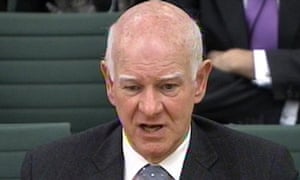
The chairman of Royal Bank of Scotland has warned that banks could pull operations out of Britain unless Theresa May draws up transitional arrangements for the country’s exit from the EU.
Sir Howard Davies said it would be damaging if there was no transitional plan and that banks would have to make decisions based on uncertainty.
Speaking to ITV’s Peston On Sunday programme, he said the US and Japanese banks were concerned by the prospect of a hard Brexit and were drawing up contingency plans.
“I think it is damaging if we don’t get a transitional deal because I think you will then see banks and financial institutions making decisions on the basis of uncertainty.
“They will not wait because they have to make a decision which will allow them to be, to continue to function in the event of a hard Brexit if that’s a possibility.
“So they will not sit back, they are currently making contingency plans and once you’ve got a contingency plan – hey, there is a risk you might implement it one day.”
Davis said the government did not need to reveal its full negotiating position, but needed to reassure the City so Britain did not encounter a “jerky and sudden” departure from the EU.
His comments come as a group of financiers and lawyers based in Milan draw up proposals for a post-Brexit financial services centre for Europe hinged around London and the Italian city.
The aim of Select Milano, an independent organisation endorsed by the Italian government, is not to steal business from London but to help financial services thrive in Europe after the UK leaves the EU.
Its chief executive, Bepi Pezzulli, said one idea that was being drawn up was Dublin as satellite because the Irish legal system was closest to the principles of English law that financiers were accustomed to.
“I don’t think destroying or fragmenting the City of London is a good way forward,” said Pezzulli. “Destroying a cluster is not good. We should instead enlarge the cluster and make London and Milan the head of a new cluster.”
The cluster is a reference to the varied businesses that are based in London, such as banking, fund management and private equity, and the services that build up around them, such as accountancy and legal services.
As a result of Brexit, financial services firms operating out of London are expected to have to shift business – and jobs – to other parts of the EU to enable them to keep access to the “passport” which allows them to sell products across the EU with ease.
Dublin, Frankfurt, Paris and Madrid are among the cities keen to benefit from any exodus from London. There have been warnings, though, including from a Bank of England deputy governor, that New York could end up being the main beneficiary from any loss of business from London.
The Bank of England deputy governor Sir Jon Cunliffe said this month that while it was possible that some activities currently carried out in London would need to move elsewhere in Europe, it would take time for any one financial centre to acquire the “cluster” effect of the UK capital.
Select Milano is targeting one of the largest aspects of London-based business: euro-dominated clearing. Although the UK does not use the euro, London is the centre of €570bn of trading in financial products in Europe’s single currency.
Much of this business passes through the London Clearing House, partly owned by the London Stock Exchange, which is in the throes of a merger with Frankfurt-based Deutsche Börse. The LSE also has links in Milan, owning the stock exchange and operating the Italian clearing house.
Pezzulli, a lawyer, said: “We are not joining a queue to steal business from London.” He suggested setting up a European economic interest group (EEIG), of legal entities able to operate inside and outside the EU.
