15 Part Time Business Ideas


Three of Australia’s big four banks have opposed parliamentary recommendations that senior executives should be automatically named for breaches affecting customers.
The chief executive of Westpac, Brian Hartzer, was the final of the big four bank bosses to appear before the house standing committee on economics reviewing past behaviour.
Under the proposal, banks would be required to publicly disclose breaches of licence conditions soon after reporting them to the Australian Securities and Investments Commission (Asic), including naming managers responsible for sections involved and any disciplinary consequences.
In the past week, Commonwealth Bank and National Australia Bank refused to support the recommendation, while the chief executive of ANZ, Shayne Elliot, supported the principle of naming executives but said the five-day reporting period was problematic.
On Wednesday Hartzer said Westpac supported increasing transparency and accountability but it was not practical to report in such a way.
“The point I am making is that when you get to the issue of consequences, in some cases where something is a massive significant issue, you might take action at that time,” Hartzer said. “In other cases, these things range, it is not black and white.”
Hartzer said Westpac had “no issue” with identifying senior executives, but had concerns with elements of the recommendation including the timeframe and listing consequences.
He said it was important for the banks to be able to explain disciplinary actions, because it was “more complicated than X happened with Y consequence”.
In opposing the proposal Commonwealth Bank’s chief executive, Ian Narev, told the committee on Tuesday that public reporting of breaches occurred expeditiously, often before disciplinary consequences had been determined.
Narev suggested that disclosing disciplinary consequences in annual reporting to shareholders would be more appropriate.
On Tuesday Elliot told the committee that public disclosure could be implemented but questioned the proposal to link it to breach reporting to Asic.
He warned that “overly punitive sanctions” could result in a “culture of fear”, preventing people speaking up about their own or others’ mistakes.
In Wednesday afternoon’s hearing, the Australian Bankers Association chief executive, Steve Munchenberg, updated the committee on development of a “bad apples” register. The register would allow prospective employers to check if a bank worker had been fired or faced other disciplinary consequences at their previous employer.
Munchenberg said the register was “easy to say but difficult to do” because of concerns about privacy and natural justice.
He also warned it could be open to abuse if a manager threatened to put a staff member on the register, preventing them securing work elsewhere.
Munchenberg said the industry was still developing the register but it might require legislation to establish.
Committee member, Labor MP Matt Thistlethwaite told Guardian Australia the register should be run by Asic or the Australian Prudential Regulation Authority should provide the register so it is “not subject to industry manipulation”.
Earlier in the hearing, the chair of the committee, Liberal MP for Banks David Coleman, raised the prospect of the Australian Competition and Consumer Commission (ACCC) having a standing function to examine competition across the industry as a whole.
Coleman said the ACCC currently only focused on certain breaches of competition law but did not extend to the broad perspective of competition in sector.
Hartzer replied that the sector already “feels very competitive”. “We don’t fundamentally object [to ACCC reviews] but we don’t think it’s necessary.”
Hartzer noted the financial system inquiry had recommended giving Asic a mandate to review competition and argued six-monthly ACCC competition reviews would amount to duplication.
Munchenberg said the banking sector didn’t have “perfect competition”. But he opposed a dedicated unit in the ACCC, deriding it as a “make-work program”.
The parliamentary committee was established by the Coalition in response to pressure from Labor, the Greens and Nick Xenophon for a royal commission.
Asked about a royal commission, Hartzer said it would be expensive and would not bring about immediate action and the banking industry was already highly regulated – echoing the government’s objections to such a commission.
On Tuesday Elliott said the large number of more targeted reviews currently under way were better at achieving “real change”.
Labor and Liberal MPs traded barbs about the necessity of a royal commission. Labor’s Madeleine King arguing that threats of a royal commission had prompted other reviews. Liberal MP Julia Banks said a royal commission was like a semi-trailer attempting to do a U-turn, compared with the “snappy sports car” of more targeted reviews.
Last month a former Westpac banker was sentenced to three years in prison after signing up elderly customers to $4m in loans they could not repay. The bank also decided to refund foreign transaction fees paid by hundreds of thousands of credit card customers after it decided it has disclosed too little information about the charges. Westpac, NAB and ANZ are also facing legal action over allegations of rate rigging.
Hartzer said the bank was disputing some of allegations in the past six months but it was on the path to closing the “trust gap”.
Industry Super Australia has produced a dark advertising campaign that attacks Australia’s major banks, warning workers about the banks’ lobbying efforts in Canberra.
In a 45-second ad, released on Monday, the big banks are portrayed as foxes that are scratching to get into a suburban chicken coop.
A voiceover warns that Australia’s banks are “putting pressure on our federal politicians to let them in,” before the hand of a suit-wearing man unlocks the door to the chicken coop, allowing the foxes inside.
“The big banks want to get their hands on your super,” the ad warns. “Banks aren’t super.”
It is a stark visual metaphor that the not-for-profit super industry hopes will resonate with Australians, and marks a serious ratcheting up of the sector’s battle with the major banks.
It comes after a recent poll, commissioned by Industry Super, found just 31% of Australians trust the views of the big four banks – NAB, Commonwealth, Westpac and ANZ – on super, compared with 69% who trust industry super funds.
The ad pits Industry Super Australia (ISA) against the Turnbull government. ISA believes the government has sided with the major banks over the banks’ attempts to extend their market share of Australians’ super savings.
Kelly O’Dwyer, the minister for financial services, made a provocative speech late last year to a superannuation conference in Canberra.
She told the conference that Australia’s super funds were not governed at the same standard as major banks and life insurance companies, which drew laughter from the audience.
She was later ridiculed by Peter Collins, the chairman of ISA and a former leader of the New South Wales Liberal party.
“The minister for superannuation is saying that she would like super fund governance to be the same as governance for the banks,” Collins told Guardian Australia.
“If super funds had been responsible for systemic failures in financial advice, failure to pass on interest rate cuts, excessive executive remuneration and other forms of profit gouging by banks, there would have been a royal commission into super funds in a flash.
“It is abhorrent and unacceptable in the minds of most Australians that the standards for super funds should be the same as those tolerated for the banks.”
O’Dwyer says she wants to force all super funds – including not-for-profit default funds – to appoint an independent chair and fill a third of their board seats with independent directors, in a bid to make the industry more accountable and transparent.
“I look forward to working constructively with the opposition, the crossbench senators and my colleagues to ensure the Turnbull government can deliver on its commitment to put members’ interests ahead of the self-interest in the superannuation sector,” she said last month.
But ISA has repeatedly argued that that would be unnecessary.
It says industry funds have an “equal representation” model under which half their board seats go to contributing employers and the other half to affiliated unions, and that has created successful board cultures that promote members’ interests, and which have helped industry funds generate superior returns to those of for-profit funds.
It says industry funds have generated returns of 6.3% on average over the last 20 years, compared to 4.5% for retail funds, without charging commissions or misselling to members.
The ad comes just days the Australian Securities and Investments Commission released the findings of its review of the conduct of the financial advice arms – between January 2009 to June 2015 – of AMP, ANZ, CBA, NAB and Westpac.
As a result of the probe, more than 1,300 customers were paid compensation for poor financial advice; 26 financial advisers employed by the banks and AMP were banned, and many others remain under investigation.
O’Dwyer said the review showed Asic was taking “proactive steps to monitor the financial advice sector’s compliance with the law,” and to work with the sector to prevent future harm to consumers.
The chief executive of ISA, David Whiteley, said the findings warned against greater bank involvement in the compulsory super savings of millions of Australians.
“The banks and their subsidiaries have a deeply entrenched sales culture that runs counter to consumer interests and is clearly incompatible with the public policy objectives of compulsory superannuation,” he said.

The future of the deputy governor of the Bank of England is in the balance this weekend as MPs weigh up whether to issue a stinging rebuke to Charlotte Hogg, the second most powerful official at the Bank.
Pressure has been mounting on Hogg, who only took over as deputy on 1 March, since her admission last week that she failed to disclose a potential conflict of interest over her brother’s position as a key Barclays bank executive.
Hogg had told MPs that the Bank, run by governor Mark Carney, was aware of Quintin Hogg’s role at the high street lender. However, days later she was forced to write to the Treasury select committee to admit she had not told colleagues of her brother’s job as Barclays’ director of strategy when she joined the institution in 2013. One of the key roles of the Bank of England is to police other banks.
A scion of one of Britain’s most blue-blooded political families, 46-year-old Hogg faces the possibility that MPs on the select committee will cast doubt on her suitability to hold her job.
The MPs have already discussed asking the Bank to cancel her promotion and are expected to meet on Monday to determine what action to take. The MPs only have an advisory role with regard to Bank appointments, but their opinion is influential.
As deputy governor, Hogg is responsible for monitoring markets and banking, and has also kept her previous job as the bank’s chief operating officer, in charge of day-to-day management at the 300-year-old institution. In that role she helped to write the Bank’s conflict of interest guidelines, which she has contravened.
When the controversy erupted last week, Carney moved to draw a line under the matter by issuing Hogg – regarded as a leading candidate to succeed him – with a rare verbal warning. However, John Mann, a Labour MP who sits on the Treasury committee, described her position as untenable.
Mann told the Guardian the committee could not sack Hogg but his view was that her promotion should be reversed. “I don’t think she should be promoted,” Mann said, adding he would urge fellow MPs to adopt his view.
Few other members of the committee have spoken out publicly, but its chairman, Andrew Tyrie, said MPs would offer an opinion on whether she should go “after a period of reflection”. At least one MP has privately pledged to support her but another told the Financial Times: “It’s not looking good for her. She has been hoist by her own petard.”
Members of the Bank’s court, the equivalent of a board of directors which oversees its running, have acknowledged the seriousness of the situation. Bradley Fried, the court’s deputy chairman, told MPs at a hearing on Tuesday it would go down as “a watershed moment in Ms Hogg’s professional and public life”.
Jacob Rees-Mogg, the Conservative MP who sits on the committee, told the Guardian his focus was on the Bank’s governance. “I think the court looked complacent when it came before the committee last week which reopened issues about the bank’s governance that are more important than Charlotte Hogg’s mistake,” he said.
David Blanchflower, professor of economics at Dartmouth College in the US and a former Bank policymaker, doubted she would survive, saying: “I think she will have to be a sacrificial lamb.”
But Lord Myners, a former member of the court and an ex-City minister, said: “For some people this will raise questions about the role of the court ... I do not think this error is sufficient to disqualify her from her job.”
A week ago, the MPs issued a report on Hogg’s role in which they said there were worried about groupthink at the Bank and “concerned about the need to develop diversity of view”.
The Treasury declined to comment on Friday, but at the time of her appointment the chancellor, Philip Hammond, said Hogg had “exceptional leadership skills and wide ranging experience.” .
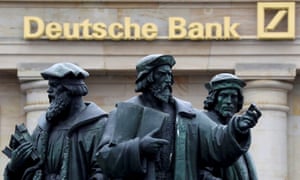
The German bank that loaned $300m (£260m) to Donald Trump played a prominent role in a money laundering scandal run by Russian criminals with ties to the Kremlin, the Guardian can reveal.
Deutsche Bank is one of dozens of western financial institutions that processed at least $20bn – and possibly more – in money of “criminal origin” from Russia.
The scheme, dubbed “the Global Laundromat”, ran from 2010 to 2014.
Law enforcement agencies are investigating how a group of politically well-connected Russians were able to use UK-registered companies to launder billions of dollars in cash. The companies made fictitious loans to each other, underwritten by Russian businesses.
The companies would default on these “debts”. Judges in Moldova then made court rulings enforcing judgments against the firms. This allowed Russian bank accounts to transfer huge sums to Moldova legally. From there, the money went to accounts in Latvia with Trasta Komercbanka.
Deutsche, Germany’s biggest lender, acted as a “correspondent bank” for Trasta until 2015. This meant Deutsche provided dollar-denominated services to Trasta’s non-resident Russian clients. This service was used to move money from Latvia to banks across the world.
During this period many Wall Street banks got out of Latvia, citing concerns that the small Baltic country had become a centre for international money laundering, especially from neighbouring Russia.
In 2013, and under US regulatory pressure, JP Morgan Chase ceased providing dollar clearing services to the country.
From 2014, only two western lenders were willing to accept international dollar transfers from Latvian banks. They were Deutsche and Germany’s Commerzbank. Deutsche eventually withdrew correspondent services to Trasta Bank in September 2015.
Six months later, Latvian regulators shut down the bank. They cited repeated violations, and said the bank had failed to deal with its money laundering risk.
Latvia’s deputy finance minister, Maija Treija, said the money sent via Trasta was “either stolen or with criminal origin”.
The defunct bank was being used as vehicle to get money out of the ex-Soviet Union and “into the EU financial system”, she added.
Deutsche said it had significantly strengthened its systems and controls. It said that by the end of this year it will have hired more than 1,000 new staff in its compliance and anti-financial crime unit since 2015.
It added: “The bank has comprehensively reviewed its client onboarding and know-your-client processes and where necessary is exiting higher risk client relationships and markets.”
Commerzbank said it could not comment on its relationships with other banks. It said it put a high value on compliance. It said that suspicious transactions picked up during routine monitoring were reported to the authorities.
Deutche Bank ended its relationship with Trasta soon after Latvia’s regulator issued a warning, it is understood. In August 2015, the Financial and Capital Markets Commission stopped all transactions above €100,000.
Deutsche severed its relationship with the other key Laundromat bank - Moldova’s Moldindconbank – in 2012.
Ties with Russia are a matter of acute sensitivity for Deutsche. In February, it emerged that Deutsche had secretly reviewed multiple loans made to President Trump by its private wealth division to see if there was a connection to Russia. Trump owes Deutsche about $300m.
Deutsche refused to comment on its internal review. Sources say the bank discovered no evidence of any Moscow link. That covers other members of the US president’s family who are also Deutsche clients. They include Trump’s daughter, Ivanka, her husband, Jared Kushner, and Kushner’s mother, Seryl Stadtmauer.
In January, the UK and US imposed record $630m fines on Deutsche for its role in another money laundering scam run out of its Moscow office. The bank failed to prevent $10bn of Russian money being laundered in a complex “mirror trades” operation. The wealthy Russians that used the scheme have not been identified.
Deutsche’s Private Bank – the division that lends to Trump – appears in the Global Laundromat scheme. Sources suggest that many of its clients are rich Russians, typically with personal assets of $50m-plus. According to Germany’s Süddeutsche Zeitung, Deutsche processed more than $24m of Laundromat cash in 209 transactions.
Records obtained by the Organized Crime and Corruption Project (OCCRP) and Novaya Gazeta from anonymous sources show how the money was spent. Much of it vanished into opaque offshore companies. Some of it went on luxury items including diamonds, leather jackets, and home-cinema equipment.
One of Deutsche’s high net worth customers blew €500,000 at Mahlberg, a German jewellery firm. The payment in January 2013 was made by Seabon Limited, a Laundromat company registered in Tooley Street, London. More than $9bn was funnelled via Seabon, records show.
Almost €1m went to a Munich electronics firm, Rohde & Schwarz, which produces surveillance technology for security services and police.
Often, the explanation for high-volume payments was fake. The money spent on watches was marked down on the bank wire transfer as a payment for “computer equipment”.
Another $500,000 payment was made to a London fur broker, Gideon Bartfeld. Bartfeld said the money had arrived from Deutsche Bank New York, before being sent on to the Bank of New York Mellon, which paid the invoice. Trasta – the bank that first sent the money to Deutsche – did not appear in any paperwork, he added.
Bartfeld said the payment came via two “highly reputable and respected” global banks. He said: “Consequently, we received this payment in full confidence [as they] were satisfied that the payment met their rigorous due diligence and compliance requirements.”
The fur trader said he had known many of his Russian clients for years. His main markets were Russia and China, he added. There is no suggestion that Bartfeld or Mahlberg or Rohde & Schwarz were involved in wrongdoing.

Cometh the hour, cometh the man. With Philip “the Undertaker” Hammond still sulking about his budget and refusing to talk to anyone, it was left to Simon Kirby, the City minister who looks like a cross between Swiss Toni and Geert Wilders – though without the gravitas – to take the hit for the government.
Kirby was on a warning. Having recently been relieved of any involvement in Brexit after everyone realised he was hopelessly out of his depth, the Treasury was conducting a process of elimination to discover if there was anything he could do well. On the basis of his answers to an urgent question from Labour on the Guardian’s allegations about British banks processing billions of pounds of dirty Russian money, the answer might well be nothing. Kirby is a man who likes to keep his talents well hidden.
“We want our financial institutions to lead the way in money laundering,” Kirby announced, inadvertently sounding disappointed that our banks had yet to compete with Switzerland and the Cayman Islands for handling crime proceeds. “We will do what it takes,” he continued, his finger moving over the relevant lines in the statement what he had wrote. The government was doing lots and lots. So much, that he couldn’t quite remember any of it.
The shadow chancellor, John McDonnell, began by accusing Kirby of complacency – this was harsh; Kirby might be stupid, but that doesn’t necessarily make him complacent – before going on to point out that, of the banks implicated in the scandal, HSBC had form, RBS was three-quarters owned by the government and Barclays had been involved in Libor rigging. Was this not cause for concern about the stability of the financial system?
Not really, shrugged Kirby. He was sure that the Financial Conduct Authority and the National Crime Agency were doing a fine job and if anyone was capable of sniffing out wrongdoing it was them. Besides which, he was in the process of consulting on something, though he couldn’t say what as he would have to kill everyone if he did. But make no mistake, the something he would be consulting on would be a big step forward.
Conservative David Nuttall tried to help the minister by pointing out that he had been made to fill in loads of money laundering forms to open a personal bank account. Good point, observed Kirby. It was precisely because the rules about money laundering were so comprehensive and complicated that the banks were struggling. What was needed was a relaxation of the laws.
After that, the Labour benches went for Kirby. Angela Eagle said that he had no idea of the scale of the scandal while John Mann observed: “You appear to have been promoted beyond your competence.” No one disagreed. Could the minister say which banks had been prosecuted for money laundering in the last five years and what he had learned from those judgments? Give me a break, Kirby pleaded. He had only heard about the Global Laundromat story that morning – and he hadn’t got further than the first few paragraphs, as it was all terribly complicated.
“Right and proper,” Kirby jabbered desperately. “Everything is right and proper.” Apart from the things that weren’t right and proper, and he wouldn’t rest until they were right and proper. Just please stop asking him difficult questions as he didn’t know any of the answers.
Could he say how many money launderers had been sent to prison in the past five years? No chance. Would he like to have a guess? Not really. Oh go on, think of a number. “I’m not aware of the exact number,” he said, though he was convinced that he took everything very seriously and it was right and proper that money launderers should go to prison if they were bang to rights.
Kirby was no clearer on whether Russian dosh had influenced the Brexit vote but frankly he wasn’t that bothered. “I should imagine the Foreign Office is dealing with that,” he said. Would he like to check on that? Nah. Imagining was just fine.
“You’re appalling at this, are you?” said Labour’s Rushanara Ali. “Can we have the chancellor next time?”
Kirby sobbed. If only.

The Guardian approached 17 banks that are either based in the UK or have a presence here – and are therefore obliged to have strict anti-money-laundering procedures. They are also supposed to reject or flag any transactions that are a cause for concern.
We asked the banks three broad questions:
1 Given the longstanding and publicly rehearsed concerns about money laundering through Moldova and Latvia, what steps has your bank taken to ensure that it has not been in receipt of so-called “dirty” money from transactions emanating from these countries?
2 Did your bank’s internal anti-money-laundering processes “red flag” these transactions?
3 Are you cooperating with, or have you ever cooperated with, the Moldovan inquiry into the “Global Laundromat”?
We received these replies:
Bank of America declined to comment.

Fraud investigators have launched a review of the activities of Britain’s high street banks following revelations in the Guardian about a $20bn money laundering scam that MPs described as a national disgrace and scandal.
Forced to answer urgent questions in the House of Commons, the Treasury minister Simon Kirby announced the Financial Conduct Authority (FCA) and the National Crime Agency (NCA) would be examining allegations that Britain’s banks processed vast amounts of tainted money from Russian criminals without noticing.
But in sometimes bruising exchanges, Kirby was criticised by MPs from all sides for giving complacent answers to questions, and for failing to acknowledge the ease with which such cash can be transferred through London, which is now seen as one of the money-laundering capitals of the world.
Labour called for the debate after the Guardian revealed that police in eastern Europe have been investigating how at least $20bn was moved out of Russia during a four-year period from 2010.
Detectives have exposed a money-laundering scheme, called the “Global Laundromat”, that was run by Russian criminals with links to their government and the former KGB.
Documents seen by the Guardian show British-registered firms played a prominent role in the money laundering network – and the UK’s high street banks processed almost $740m from the operation without turning back any of the payments.
HSBC processed $545.3m (£436.8m) in Laundromat cash, mostly routed through its Hong Kong branch. The troubled RBS, which is 71% owned by the UK government, handled $113.1m. Coutts, which is owned by RBS and used by the Queen, accepted $32.7m of payments via its office in Zurich, Switzerland.
In all, 17 banks based in the UK, or with branches in the country, are facing questions over what they knew about the transfers.
Speaking to the Guardian, the head of the NCA’s money laundering unit, David Little, said the amount of Russian money now coming into the UK is a concern because “we don’t know where it is coming from”.
“We don’t have enough cooperation [from the Russian side] to establish that. They won’t tell us whether it comes from the proceeds of crime.”
He also said that UK banks needed to spend more money investigating criminal activity because sophisticated money launderers knew how to defeat their flagging systems.
His remarks were referred to by MPs during a half-hour debate in which Kirby, economic secretary to the Treasury, insisted the UK was doing more than any other country to tackle money laundering.
The minister said: “The Financial Conduct Authority and National Crime Agency take any such allegations seriously and will investigate closely whether recent information from the Guardian newspaper regarding money laundering from Russia ... would allow the progression of an investigation. Beyond that we need to make sure sophisticated criminal networks cannot exploit our financial services industry.”
The shadow chancellor, John McDonnell, called for an assurance from the government that “there will be the potential of opening up criminal proceedings to break up what is effectively a criminal network”.
He said the minister “does not seem to realise the immense gravity of the situation we are facing”.
Labour former minister Ian Austin told MPs an estimated £100bn is laundered through London every year – but only 0.17% of that has been frozen by the authorities.
“We might as well go from here, go to Heathrow and put up a welcome sign for Russian murderers and money launderers.”
James Berry, the Tory MP for Rossendale and Darwen, said the allegations “if proven, will be a national disgrace”.
Robert Barrington, the executive director of Transparency International UK, said the Guardian’s revelations of the UK’s role in financial crime should “come as no surprise to anyone”.
“A year after the Panama Papers, we can see that the anti-money laundering supervisors have been asleep on the job, the banks have been at best lax and at worst complicit, and the UK’s law enforcement agencies have a dismal track record of investigations that lead to prosecutions.
“Basically, the UK’s anti-money laundering defences are just not fit for purpose. The government needs a concerted, world-class strategy to deal with this if it’s going to convince people that we are not in a post-Brexit race to the bottom in which corrupt money is welcomed to the UK with open arms.”
In a statement, the FCA, said: “Clearly these are serious allegations and we will investigate any evidence that we receive.”
The NCA said it would “consider any formal request for assistance from the Moldovan authorities in connection with their investigation, and will consider whether information provided by the Guardian or other media sources would allow the progression of an investigation.”
The Guardian put detailed questions to all 17 UK based banks. The response from RBS was typical.
In a statement that also covered Coutts and NatWest, RBS said: “We are committed to combating financial crime and money laundering in line with our regulations and have controls and safeguards in place to identify, assess, monitor and mitigate these risks.”

The revelations published in the Guardian yesterday about the criminal network that is processing money through major British banks are a damning indictment of the failings of our banking system. For a period of at least four years, shortly after the financial crisis in the early 2010s, Russian criminal interests moved nearly $740m through British banks, including HSBC, RBS, Barclays, Lloyds and Coutts, with HSBC as the largest conduit by far.
They could do this, despite regulations expressly designed to prevent such activity taking place. Yet, when presented with a series of urgent questions, demanding answers and action, the response from the government was astonishingly complacent. A mere week after the self-employment tax U-turn, it is following a path well-worn since 2010 – pathetically easy on the big banks and the super-rich, but tough on those just trying to earn a living.
George Osborne, the then chancellor, intervened directly into a 2012 US investigation into HSBC’s money laundering, emailing the Department of Justice (DoJ) to warn that prosecuting Britain’s largest bank would lead to a “global financial disaster” and “financial calamity”. A later Congressional investigation found that the intervention, by the now new editor of the Evening Standard, “played a significant role in ultimately persuading the DoJ not to prosecute HSBC”.
It was under Osborne’s watch that the bank levy, introduced by the last Labour government to claw back some of the astronomical returns major banks had been making, was phased out, in his first budget after the 2015 election. HSBC had previously threatened to leave the country if its £700m bank levy charge wasn’t reduced, lobbying the government heavily. Osborne’s new tax regime for banks, introduced in summer 2015, instead leant most heavily on the smaller banks that had been looking to break the high street dominance of the big banks, and eased the burden substantially on the biggest institutions with major international interests – happily enough, HSBC was the biggest winner of all.
The current chancellor, Philip Hammond, although appointing HSBC’s former European chief economist as his economic advisor, had claimed he was going to “press the reset button” on economic policy shortly after arriving in office. It is now clear that he is sticking to the same failed Osborne-era austerity policy, married to the same degree of incompetence in presenting his budgets.
He is also showing the same unwillingness to challenge seriously financial practices at our major banks, failing to answer Labour’s urgent question himself and instead sending over an inexcusably poorly briefed and complacent junior minister in his stead.
This failure to challenge bad practices extends even to those cases in which the taxpayer is the major shareholder in a bank. The failures of governance, management and in some cases basic morality at taxpayer-owned RBS are legion. The activities of its “global restructuring group” in grinding viable small businesses into the ground so the rest of the bank could pick off the carcasses were under any circumstances wholly unacceptable. But when this is an institution still 72% owned by the public, and when that institution is seemingly so lax as to allow $113m of laundered cash through its doors, it is adding insult to existing injury.
There are three assurances the government must now give. First, that it will not – as it has in the past – interfere in any potential criminal investigations on the spurious grounds of “financial stability”. The major risk to financial stability is not from investigations intended to clear out criminal activity from our banking system. The risk is from failing to act and to ensure that our major banks are clean and fit for purpose.
Second, all the banks involved claim to have strict internal policies to deal with money laundering, and both the Financial Conduct Authority and the National Crime Agency offer guidance on dealing with suspicious transactions. But yesterday’s revelations make clear that these are not working.
The House of Commons Home Affairs Select Committee found last summer that the “suspicious activity reporting” system, by which banks and other financial institutions could report suspicious transactions, was “not fit for purpose”. Designed originally to handle 20,000 reports, it was collapsing under the weight of over 381,000 suspicious activity reports. The select committee demanded the government replace the current system by the end of last year. This has not happened and there is no indication or timetable given in the government’s own reply to the select committee to suggest that it will.
Third, it is time to cleanse the Augean Stables at RBS. Now that the government has given up attempting to sell its stake in RBS, a new approach must be taken. Having spectacularly missed the opportunity earlier today, the chancellor must now clarify how he will restore public trust and confidence in our financial system.

Britain is struggling to stop vast sums of potentially criminal money entering the country because investigators are being hampered by the Russian authorities, the head of the National Crime Agency money laundering unit has said.
In an interview with the Guardian, David Little said: “The amount of Russian money coming into the UK is a concern. “One, because of the volume. Two, we don’t know where it is coming from. We don’t have enough cooperation [from the Russian side] to establish that. They won’t tell us whether it comes from the proceeds of crime.”
Labour has been granted an urgent question in the Commons on the subject. The shadow chancellor, John McDonnell, will raise the issue at 12.30pm on Tuesday in a debate, with a government minister responding.
Little, who is head of the NCA’s money laundering and corruption intelligence desk, said his team exchanged information with the Russian Financial Investigation Unit.
But he hinted that frosty diplomatic relations between the UK and Moscow, and the murky internal politics of Russia itself, made it impossible to pursue leads.
He pointed to the “wider relationship issues that exist within Russia”, adding: “Overall, the [UK-Russia relationship], it’s very challenging.”
On Monday, the Guardian revealed that police in eastern Europe have been investigating how at least $20bn was moved out of Russia during a four-year period from 2010.
Detectives have exposed a money laundering scheme, called the “Global Laundromat”, that was run by Russian criminals with links to their government and the former KGB.
Documents seen by the Guardian show British-registered firms played a prominent role in the money laundering network – and the UK’s high street banks processed $740m from the operation without turning back any of the payments.
The banking records were obtained by the Organized Crime and Corruption Reporting Project (OCCRP) and Novaya Gazeta from sources who wish to remain anonymous. OCCRP shared the data with the Guardian and media partners in 32 countries.
The documents include details of around 70,000 banking transactions, including 1,920 that took place in the UK and 373 in the US.
The data is understood to be part of the evidence gathered in a money laundering investigation led by police in Moldova and Latvia that has been running for three years.
Little said the NCA had been in touch with the authorities in Moldova since 2014 about the Global Laundromat, which he described as “big and pretty unusual”.
He acknowledged that UK banks had taken steps to identify laundered money, but insisted they needed to spend more on compliance, even though it “isn’t the part of the bank that makes money”.
“I think the [banks] have significant challenges. Twenty million transactions go through the City and in trades through the money markets each day. A vast amount of business, and only a small amount will be money laundering.
“It’s the size of the challenge which is the problem. It’s beyond a human scale. The sophisticated money launderer will know the tolerances that will trigger alerts. There are pretty smart guys out there. This needs more sophisticated solutions than throwing people at it. It’s not just about the size of the staff.
“[The banks] are improving but they can still get better.”
Little said he thought it was likely that other sophisticated, long-running schemes like the Laundromat were still being used by criminals.
“Typically these schemes operate for a number of years. The money moves through it. It keeps churning away until something triggers it [to stop]. These are the most dangerous schemes.”
He said the NCA would be reviewing its work on the Laundromat in the light of the revelations.
“We have an interest in all money laundering schemes like this, particularly where UK structures appear to have facilitated it.”
Robert Barrington, the executive director of Transparency International UK, said the revelations of the UK’s role in financial crime should “come as no surprise to anyone”.
“A year after the Panama Papers, we can see that the anti-money laundering supervisors have been asleep on the job, the banks have been at best lax and at worst complicit, and the UK’s law enforcement agencies have a dismal track record of investigations that lead to prosecutions.
“Basically, the UK’s anti-money laundering defences are just not fit for purpose. The government needs a concerted, world-class strategy to deal with this if it’s going to convince people that we are not in a post-Brexit race to the bottom in which corrupt money is welcomed to the UK with open arms.”
Barrington said it was good that that criminal finances bill was currently before parliament, but added: “The bad news is that at last year’s anti-corruption summit, the government promised to publish a national anti-corruption strategy by December, and there is no sign of it.”
Roman Borisovich, a former banker and anti-corruption campaigner, said the British government needed to do more to end offshore secrecy. It should identify the real owners of offshore companies doing business or owning assets in the UK.
“In Russia I have witnessed an entire shadow industry of money laundering engineered by professional financiers and operated by organised criminal groups under the Kremlin’s watchful eye,” he said.
According to the Central Bank of Russia, capital flight out of Russia during the Vladimir Putin years exceeded $1tn, he said. “We have no idea yet how the other $900m got across the Russian border – but rest assured they ended up in the same banks.”
HSBC, the Royal Bank of Scotland, Lloyds, Barclays and Coutts are among 17 banks based in the UK, or with branches here, that are facing questions over what they knew about the international scheme and why they did not turn away suspicious money transfers.
HSBC processed $545.3m in Laundromat cash, mostly routed through its Hong Kong branch. The troubled RBS, which is 71% owned by the UK government, handled $113.1m. Coutts, which is owned by RBS and used by the Queen, accepted $32.7m of payments via its office in Zurich, Switzerland.
Coutts is winding down its Swiss operation and was last month fined by regulators for money laundering in a different case.
RBS said in a statement that also covered Coutts and NatWest: “We are committed to combating financial crime and money laundering in line with our regulations and have controls and safeguards in place to identify, assess, monitor and mitigate these risks.”
HSBC said: “This case highlights the need for greater information sharing between the public and private sectors, each of whom holds important information the other does not.”

The best defence against a bid is a high share price. So congratulations to Unilever, whose shares have improved by 20% since the day before Kraft Heinz turned up offering to buy the maker of Hellmann’s mayonnaise and Magnum ice-creams.
In the event, Unilever blew Kraft Heinz’s £115bn proposal out of the water within 48 hours. Fury from the boardroom, plus Kraft’s belated realisation that it was walking into a storm, did the trick. But Unilever has wasted little time in moving to protect itself better. It has pledged to “capture more quickly the value we see” – which usually means running the business harder and ensuring the backdoor is not left ajar for opportunistic bidders.
One way of looking at this is to say Unilever would have won anyway. If it can improve its share price by a fifth just by promising to hurry up, expectations for a fair takeover price might have run beyond Kraft’s ability to pay. Yet that is surely naive. If Kraft, egged on by banks willing to lend colossal sums, had pushed the premium to 35%-40%, Unilever’s 100-year-long independence would probably have been over.
Fund managers would have declared their admiration for Unilever chief Paul Polman and his social responsibility agenda. But then they would have explained that their own fiduciary duties obliged them not to look gift horses in the mouth. In no time, Unilever’s shareholder register would have been populated by merger arbitrage funds. The target could have been served up neatly, as Cadbury was to Kraft in 2010.
Just capitalism in action, it might be argued – no point being squeamish. Kraft may be an unlovely maker of processed cheese backed by a Brazilian billionaire with a well-developed appetite for ripping out costs, but Unilever is a commercial enterprise too.
Yet that line is too simplistic, for the reasons Theresa May gave in her speech launching her leadership campaign last summer. “As we saw when Cadbury’s – that great Birmingham company – was bought by Kraft, or when AstraZeneca was almost sold to Pfizer, transient shareholders, who are mostly companies investing other people’s money, are not the only people with an interest when firms are sold or close,” she said. “Workers have a stake, local communities have a stake, and often the whole country has a stake.”
After a statement like that, it would have been hard for May to be agnostic about Kraft’s offer. Jorge Paulo Lemann, founder of 3G Capital, Kraft’s principal shareholder, runs a takeover machine that extracts short-term value then looks for its next target. Unilever prizes long-term investment, sustainability and protection of the environment. The cultures are polar opposites. For anyone who believes “transient shareholders” should not monopolise the debate, a takeover would have been a disaster.
But May could have done virtually nothing: the government’s powers are limited to areas of financial stability, national security and media plurality. She needs to understand that if even well-run companies like Unilever can be seen as vulnerable, the takeover game has changed. Debt is cheap, fund managers are judged on quarterly performance and 3G’s style of short-termism is fashionable and formidable.
The UK, with the world’s most open takeover regime, will be an obvious port of call. That is not a Brexit point, just a recognition that shareholder-first capitalism has rarely enjoyed such favourable conditions.
May does not need to go so far as offering protected status for “national champions,” as Polman seemed to suggest last week. But she must realise that merely extending the government’s reach to areas of “critical infrastructure,” as ministers have suggested, is too weak. She should order a full review of the UK’s takeover rules and consider a public interest test. It is not anti-capitalist to say so; rather, it is to recognise that companies operate within society.
Sometimes the long-term interests of society must be able to trump the short-term interests of here-today-gone-tomorrow shareholders.
Mark Tucker has six months to write his to-do list in preparation for becoming chairman of HSBC. Finding somewhere to live – with a £300,000 relocation package to smooth his return to the UK from Hong Kong, where he has been running insurer AIA – will be his personal priority.
Finding a new chief executive will be his professional priority. Tucker, a former pro footballer who is best known in the UK for his lengthy career at insurer Prudential – punctuated by a short stint as finance director of banking group HBOS – should move fast. The current incumbent, Stuart Gulliver, wants out by next year, and Tucker will no doubt grasp the opportunity to install his own person in one of the most challenging boardroom roles in Britain.
Tucker is the first outsider to become chairman in the bank’s 151-year history and his handover period will be just one month – a clear signal he does not intend to mess around.
Tucker will have two other major tasks. The first is to clean up a bank embroiled in legal battles across the world. The $1.9bn fine imposed in 2012 for breaching US sanctions still looms large: a monitor installed by the US Department of Justice to oversee the bank’s attempts to improve its compliance functions is still there. He’s US lawyer Michael Cherkasky and is continuing to voice concerns: Tucker must keep a laser focus on this issue if the monitor is to depart on schedule next year.
The second task is to boost shareholder returns in a business that employs 266,000 people in 70 countries. HSBC’s shares have been on a rollercoaster ride since Gulliver and departing chairman Douglas Flint took charge six years ago, and are little changed from where they started out. The outgoing pair have tried to cut costs, pull back from the bank’s riskiest businesses and centralise operations to try to avoid the regulatory clashes of the past.
Tucker needs to find a way to inject energy into the HSBC juggernaut without piling on risk. This is no easy task.
Sir Philip Green’s return to public life this week, via a 65th birthday party at the Dorchester hotel, was a modest affair befitting a reputation that is only just emerging from a solid Ratnering over the past 12 months. There were no Mediterranean islands, no togas, no Stevie Wonder and no Leonardo DiCaprio. Instead, attendees turned up in straightforward evening attire and the guest list included Tess Daly and Jamie Redknapp – with the dependable Kate Moss delivering the only A-list name.
The fact that any event was held at all – and that the following day’s press coverage was not laced with scorn – shows that Green’s rehabilitation has started.
Nonetheless, observe the workaday clothing, the B-list attendees, and the untropical surroundings of traffic-choked Park Lane. Sir Philip is back in the room. But it is a smaller room.
David Rockefeller, a billionaire philanthropist who was the last of his generation in the famous Rockefeller family, died on Monday. He was 101 years old.
A spokesman, Fraser P Seitel, said the sixth child of John D Rockefeller Jr and the grandson of Standard Oil co-founder John D Rockefeller died peacefully in his sleep on Monday morning at his home in Pocantico Hills, New York.
Rockefeller was at the head of a sprawling network of family interests, both business and philanthropic, that range from environmental conservation to the arts. He also headed what is now JP Morgan Chase bank. To mark his 100th birthday in 2015, he gave 1,000 acres of land next to a national park to Maine.
Aspects of the Rockefeller brothers’ upbringing became famous, including a 25-cent allowance, portions of which had to be set aside for charity and savings, and the inculcation that wealth brings great responsibility. Two held elected office: Nelson Rockefeller as governor of New York and, briefly, US vice-president; Winthrop Rockefeller as governor of Arkansas.
David Rockefeller never sought public office. Unlike his other brothers, John D III and Laurance, who shied from the spotlight, he spoke widely as a champion of enlightened capitalism.
“American capitalism has brought more benefits to more people than any other system in any part of the world at any time in history,” he said. “The problem is to see that the system is run as efficiently and as honestly as it can be.”
Rockefeller graduated from Harvard in 1936 and received a doctorate in economics from the University of Chicago in 1940. He served in the army during the second world war, then began climbing the ranks at Chase Bank, which merged with the Manhattan Company in 1955. He was named Chase Manhattan’s president in 1961 and chairman and chief executive officer eight years later. He retired in 1981 at 65.
Rockefeller favored assisting economies abroad on grounds that bringing prosperity would create customers for American products. He also spurred the project that led to the World Trade Center.
He parted company with some of his fellow capitalists on income tax, calling it unseemly to earn $1m and then find ways to avoid paying taxes on it. He didn’t say how much he paid in taxes and never spoke publicly about his personal worth. In 2015, Forbes magazine estimated his fortune at $3bn.
He was estimated to have met more than 200 rulers in more than 100 countries and often was treated as if he were a visiting head of state. Under Rockefeller, Chase was the first US bank to open offices in the Soviet Union and China and, in 1974, the first to open an office in Egypt after the Suez crisis of 1956.
In his early travels to South Africa, Rockefeller arranged clandestine meetings with several underground black leaders. “I find it terribly important to get overall impressions beyond those I get from businessmen,” he said.
But he took a lot of heat for his bank’s substantial dealings with South Africa’s white separatist regime and for helping the deposed and terminally ill shah of Iran come to New York for treatment in 1979, the move that triggered the 13-month US embassy hostage crisis in Tehran.
Rockefeller maintained the family’s patronage of the arts, including its longstanding relationship with the Museum of Modern Art in New York. His private art collection was once valued at $500m. The Rockefeller estate overlooking the Hudson river north of New York City is the repository of four generations of family history, including Nelson’s art and sculpture collection.
One of the major efforts of his later years was directed at restoring family influence in the Rockefeller Center in New York, most of which was sold in the 1980s to Japanese investors. He organized an investor group to buy back 45% of the property.
He was awarded a Presidential Medal of Freedom, the nation’s highest civilian honor, in 1998.
Rockefeller and his wife, the former Margaret McGrath, married in 1940 and had six children: David Jr, Richard, Abby, Neva, Margaret and Eileen. His wife, a conservationist, died in 1996.

The troubled £2bn privatisation of the Green Investment Bank has already cost at least £1m of taxpayer money in consultancy fees, official documents have revealed.
Ministers have promised that the sale of the bank, which has invested in green projects from offshore windfarms to energy-saving street lights, will deliver value for taxpayers’ money. An announcement on the sale to Australian investment bank Macquarie was expected in January but has yet to materialise amid strong political opposition.
Now it has emerged in newly published documents that last September officials authorised £1m in consultancy fees for the sale.
Although the Department of Business, Energy and Industrial Strategy (BEIS) has not confirmed who the money was paid to, the government’s financial adviser for the deal is Bank of America Merrill Lynch. Its legal adviser is Herbert Smith Freehills.
MPs condemned what they called an unnecessary waste of public money. Caroline Lucas, co-leader of the Green party said: “It’s outrageous that the government has ploughed a million pounds of taxpayers’ money into consultancy for a privatisation that simply shouldn’t be happening in the first place.”
The total figure spent on the sale so far is likely to be higher, given the bidding process began last March. The £1m consultancy cost is included in a disclosure of BEIS’s “exceptions to spending controls for July – September 2016”.
Vince Cable, who launched the bank in 2012, said: “I’m sure they will justify it on the basis that they got competitive quotes for their consultants. It does seem rather a lot of money.”
But, he added: “I’m less concerned about the value of the money of the sale than actually stopping it taking place in conditions where the green purposes of the bank is lost. It’s the issues of policy and principle, rather than these consultant’s fees.”
The BEIS said: “As with any asset sale, government has engaged external advisers through a competitive process to provide us with access to additional expertise, in line with [National Audit Office] recommendations on best practice.”
Earlier this month, rival bidder Sustainable Development Capital (SDCL) launched a legal challenge against the government, claiming it had complied with its own bidding criteria. A high court hearing on the London-based investment fund’s application for a judicial review is due later in March.

Businesses of all sizes need administrative help, but having a full-time employee on site can be cost-prohibitive. Enter virtual assistants (VAs), administrative professionals who offer a wide variety of services remotely, operating as their own small businesses.
Through technology like cloud collaboration software, videoconferences, project management apps and instant messaging, entrepreneurs who want to start a virtual assistant firm have all the tools they need to successfully work with business clients.
"The reasons for utilizing a VA firm have become more needs-driven, customized and service-oriented," said Michelle Anastasio-Festi, CEO and founder of CT Virtual Assistance. "It's gone beyond reducing expenses or needing more time, (and businesses are now) focusing on the bigger picture of how hiring a VA can help them achieve their business goals faster, or promote their brand or service."
If you're interested in taking advantage of this lucrative business opportunity and becoming a VA, here's some expert advice for how to make it work. [See Related Story: Online Business Ideas You Can Start Tomorrow]
Operating as a VA on your own can feel like you are all by yourself, but in fact, there are professional groups, online forums and books to support you in your business dream. By reading and researching what services a VA can perform, you can narrow down your own offerings. And by networking with other VAs, you can benefit from subcontracting work or advice from more established VAs.
"Most VAs are more than happy to help out someone who is new to the field. And even if they don’t have any subcontracting work, they may be able to refer you to someone who does," said Julie Perrine, CAP-OM, MBTI Certified, with All Things Admin.
There's a lot more to being a VA than helping with the tasks your client needs you to do. Having office experience will help you in your day-to-day duties, but as an independent business, you need to learn the ropes of how to run it.
"Working virtually means you must exercise great discipline," said Tim Petree, senior vice president of BST Concierge. "You're your own boss, (but) those corporate rules that once seemed to be a drag can save you from financial ruin when you're the CEO or sole proprietor. If anything, you must now be conversant in all areas of business administration — sales, marketing, IT, customer service, project management, receivables, payables and compliance."
As with any type of virtual work, not being in the office for face-to-face interactions with your clients can present some difficulties if your or their communications are unclear. VAs perform many of the important day-to-day tasks that keep a business running, so knowing what's required of you as a service provider is key to customer satisfaction.
As a VA and as a business owner, you'll need to be able to deliver exactly what each client needs. It's a good idea to determine the best structure for your service packages and pricing based on what your clients are looking for.
"A VA provides business owners with the opportunity to get exactly what they need, when they need it, like ordering from a menu," Anastasio-Festi said. "Because most VAs offer a wide range of services to various industries, it becomes confusing as to who needs what most. [Our firm] is moving away from hourly retainers and more towards customizing individual monthly packages that are tailored to each client's needs."

The Bank of England is unlikely to predict the next financial crisis, according to one of the central bank’s leading policymakers, who said economic models were unable to provide flawless forecasts for the UK economy.
Monetary policy committee member Gertjan Vlieghe said it was impossible for the Bank to forecast a recession, let alone the next crash, and no amount of fine-tuning models of the way the modern economy operates would change that harsh reality.
Appearing before MPs, Vlieghe warned it was inevitable there would be forecasting errors, which could include missing a cataclysmic event such as the 2008 banking crisis.
He said: “We are probably not going to forecast the next financial crisis, or forecast the next recession. Our models are just not that good.”
The Bank should continue trying to improve and refine its forecasting models, he said, but it was misguided for MPs to demand that economic forecasts offer a high degree of certainty about events that could happen several years from now.
Vlieghe, a former City economist, was answering criticisms from MPs on the Treasury select committee over a series of forecasting errors in the run-up to the Brexit vote.
Like the Treasury, the International Monetary Fund and the Organisation for Economic Cooperation and Development (OECD), Threadneedle Street predicted a sharp slowdown in the event of a vote to leave the EU.
Official figures have shown that, far from slowing, the UK became one of the best-performing economies in the developed world and the fastest growing in the G7 in the second half of 2016.
Governor Mark Carney said actions by the Bank itself, which cut interest rates weeks after the Brexit vote, and Chancellor Philip Hammond, who lifted constraints on public spending in November’s autumn statement, had helped to boost the economy in the wake of the Brexit vote.
Carney admitted the MPC had misjudged the resilience of consumer spending following a wobble after the referendum, but it could not include in its forecasts actions that policymakers might take to offset weaker confidence among consumers and businesses.
MP Jacob Rees-Mogg suggested the Bank should be more circumspect about its forecasts, rather than presenting them as “holy writ”, and then revising them six months later.
Andy Haldane, the Bank of England’s chief economist, said fan charts showed the probability of the future path of growth and inflation and in most cases the predictions were within a narrow range of the central forecast.
However, he conceded that the economics industry and the Bank found it difficult to convey a sense of uncertainty to the wider world. He said: “We know that people find risk hard to understand; I find risk hard to understand.”

A hard Brexit poses risks to the integrity of financial markets and could make it harder to protect consumers from wrongdoing by banks, the head of the City regulator has warned MPs.
Andrew Bailey, chief executive of the Financial Conduct Authority, said a cliff-edge Brexit – one in which the regulatory framework changes the instant the UK leaves the EU – also presented competition risks, alongside threats to legal and market stability.
In his latest letter to the Treasury select committee, Bailey said a sudden exit from the EU could make it difficult for regulators to obtain information about the firms they regulate.
“Any lack of certainty with regard to the regulatory framework may affect the ability of the FCA, and perhaps other regulators, to take enforcement action as a means of both addressing and deterring misconduct,” said Bailey.
He also highlighted the risks associated with the sudden loss of the “passport” that firms based in the EU use to operate freely within the 28 member states. Bailey has previously told the committee that 5,476 UK-registered firms hold at least one passport to do business in another EU or EEA member state while just over 8,000 companies authorised in other EU states use these rules to do business in the UK.
There was a risk, he said, that firms could end up without the correct permissions to sell products or find themselves vulnerable to legal action if they were not able to meet pledges to provide services to customers. The FCA may not have enough time to process applications – which take about 23 weeks – if the loss of passporting is only agreed late in the negotiations.
Bailey also provides an example of the impact of a sudden loss of passporting rights on contracts. Insurers use passporting provisions to conduct their business.
“Without suitable transitional provisions, there may be considerable uncertainty created for firms and consumers as to what the loss of passporting means in practice. We cannot rule out related risks at this stage so my teams are continuing work to map and consider potential mitigations to these risks,” said Bailey.
“None of the above risks are beyond mitigation, but the types of solutions required may be complex,” said Bailey, who added that the FCA may not be able to act alone. Ministerial action and cooperation from other governments and European national regulators may be needed.
Former shadow chancellor Chris Leslie, a leading supporter of the Open Britain campaign, said: “The last thing post-Brexit Britain needs is to tie the hands of the Financial Conduct Authority behind their back. A hard Brexit doesn’t just risk pushing our economy over a cliff edge, it risks throwing robust regulation into the void as well.
“If we learned anything from the 2008 global economic crash, it is that a clear system of regulation for financial services is essential. It is deeply worrying that the people responsible for that in this country are saying they will not be able to do their job properly if Britain crashes out of the EU without a transitional deal in place.
“When the financial watchdog are themselves saying they will not be able to properly protect consumers following a hard Brexit, the government needs to sit up and take notice.
“If the watchdog cannot watch financial transactions properly, we are leaving both peoples’ finances and markets vulnerable to abuse.”

Your article (Oncologists suffer alarming rates of burnout and stress, research finds, 17 February) ought not to surprise us. Nor is burnout confined to hard-pressed specialists: it is widespread at every level of practice and even among medical students. Doctors expect a lot of themselves, but if demands pile up and become unrelenting, the ability to adapt well has neurobiological limits. Neuroscience shows that intimate contact with suffering is physically and emotionally demanding, and that persistent stress will eventually distort how we see ourselves, our patients, and our working world. Long before stress makes us ill, it makes us dull and unfriendly. A cascade of stress responses increases error-rates, heightens irritability, engenders disengagement, and fuels the downward spiral into burnout. Yet there is evidence for an upward spiral, too: empathic doctors are safer, more effective and happier in their work. So if we want our doctors to flourish individually and professionally in these challenging times, certain human needs should be non-negotiable. Perhaps the solution is as basic as providing a little time for reflection and recovery; time that has been whittled away wherever NHS organisations lack the resources to cope with the ever-increasing demands they face.
Professor David Peters (director), Professor George Lewith, Dr Chris Manning and Professor Chantal Simon
Westminster Centre for Resilience, Faculty of Science and Technology, University of Westminster
• It has long been unacceptable and a disciplinary issue for an NHS worker to drink at lunchtime before working because of the possible impact on patient care. But it appears to be socially acceptable (‘Drinking is how the market works’ – Lloyd’s lunchtime ban falls flat in City, 18 February) for bankers and financial services staff to be drunk in charge of our investments, pensions and savings. The NHS will be there to pick them up even if they cause austerity, reducing funding available for the NHS.
Chris Jeffries
Stockport
• Join the debate – email guardian.letters@theguardian.com
• Read more Guardian letters – click here to visit gu.com/letters

Environmental groups have called on a French bank not to help finance a fracked-gas export terminal planned for south Texas.
A report released on Wednesday urges BNP Paribas and its US subsidiary, Bank of the West, to state it will not finance any projects for liquefied natural gas (LNG) terminals and to adopt a policy of not backing LNG export schemes. One of the proposals would be built on 1,000 acres of land, potentially making it the largest facility of its kind in the country.
“It’s a destructive fossil fuel infrastructure project in the Gulf coast in one of the relatively untouched parts,” said Jason Opeña Disterhoft of the Rainforest Action Network, of the plan known as Texas LNG.
He said there “is some hypocrisy” in BNP’s involvement given that the company touts its green credentials. In the wake of the 2015 Paris agreement to address climate change, the bank said it was committed to responsible investment, such as financing renewable energy rather than coalmining, and minimising atmospheric pollution as a result of its business activities.
France banned fracking in 2011 for environmental protection reasons. A spokeswoman for BNP’s US operation declined to comment on the report. Texas LNG did not respond to a request for comment.
Rebekah Hinojosa, an activist fighting the terminals, fears that construction would damage sacred Native American historical sites, harm endangered wildlife, tourism and the local shrimping industry and pollute and scar a relatively unscathed part of the coast, as well as threaten safety in the event of a disaster. Though proponents tout potential economic benefits for a deprived area, Hinojosa is concerned that the projects may ultimately cost more jobs than they create.
“That area is the beach of Texas. People come from all over the state and other nearby states to our beach because we are the last unindustrialised piece of coast along the Texas coastline,” she said. “It doesn’t have a refinery or smoke stacks on the horizon.”
Three LNG terminals are proposed for a part of the Rio Grande valley close to the city and port of Brownsville and the spring break destination of South Padre Island, one of Texas’s most popular beach resort areas. They would be only a couple of miles from the town of Port Isabel, which has a population of about 5,000.
The companies are hoping to take advantage of the fracking boom in Texas’s Eagle Ford shale formation, with gas to arrive at the Gulf coast via a new pipeline before being liquified and exported to international markets.
But the report warns that the bank “is contributing to a range of serious potential climate, environmental and social impacts” by acting as a financial adviser for the project loan for the Texas LNG terminal.
Despite the oil and gas downturn, companies are expanding into the few remaining parts of Texas that are relatively untouched by the energy industry. Protesters set up camps in remote west Texas around the turn of the year to fight the almost-completed Trans-Pecos Pipeline, which will transport natural gas to Mexico and is being built by Energy Transfer Partners, the firm behind the controversial Dakota Access pipeline.
To the north, a vast oil and gas field known as Alpine High has been discovered and environmentalists fear it could threaten a state park.
There are more than 110 LNG facilities operating in the US and 12 export terminals proposed in Texas, Louisiana, Florida and Mississippi, according to the US government’s Federal Energy Regulatory Commission, with another 19 import or export terminals approved for construction in North America.
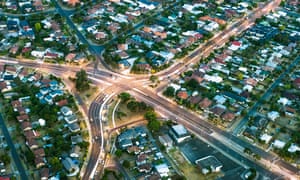
The UN special rapporteur for housing, Leilani Farha, will highlight the devastating human rights impact of society’s tendency to view houses as financial commodities rather than homes for people, in her report to the UN this week.
Farha, who has been UN special rapporteur for housing and human rights since May 2014, has published a hard-hitting report [pdf], which she presents to the UN in Geneva on 1 March. It details the shift in recent years that has seen massive amounts of global capital invested in housing as a commodity, particularly as security for financial instruments that are traded on global markets and as a means of accumulating wealth. As a result, she says, homes are often left empty – even in areas where housing is scarce.
“Shops are closing, restaurants are closing,” Farha has told the Guardian, in an exclusive interview. “You see immediately a loss of vibrancy.”
Farha wants governments around the world to act. She is calling for them to redefine their relationship with private investors and international financial institutions, and reform the governance of financial markets, in order to reclaim housing as a social good, “and thus ensure the human right to a place to live in security and dignity”. Here are some of the report’s key findings.
The report warns about a rise in “dehumanised housing”: housing built as a high-yield commodity rather than for social use. A significant portion of investor-owned homes are simply left empty. In Melbourne, Australia, for example, 82,000 (or one fifth) of investor-owned units are unoccupied. In prime locations for wealthy foreign investors, such as the affluent boroughs of Chelsea and Kensington in the city of London, the number of vacant units increased by 40% between 2013 and 2014.
In such markets, the value of housing is no longer based on its social use. Properties are equally valuable regardless of whether they are vacant or occupied, so there is no pressure to ensure properties are lived in. They are built with the intention of lying empty and accumulating value, while at the same time, homelessness remains a persistent problem.
The average income of local residents or kinds of housing they would like to inhabit is of little concern to financial investors, who cater to the desires of speculative markets. These are likely to replace affordable housing that is needed locally with luxury housing that sits vacant because that is how best to turn a profit quickly.
For instance, Kensington & Chelsea is a hotspot for building luxury housing, and yet the borough also has the fourth highest number of households in temporary accommodation in UK, as well as the highest rate of out-of-borough placements (meaning when people become homeless, they are moved to different boroughs entirely).
Farha’s report says escalating house prices have become key factors in the increase in wealth inequality. Those who own property in prime urban locations have become richer, while lower-income households become poorer. Surveys of ultra-high net-worth individuals show that over 50% have increased the proportion of their investments allocated to housing. The most common reasons are in order to sell at a later date and provide a safe return on investment, thus protecting wealth. The “economics of inequality” may be explained in large part by the inequalities of wealth generated by housing investments.
The impact of private investment has also contributed to spatial segregation and inequality within cities, Farha points out. In South Africa, private investment in cities has sustained many of the discriminatory patterns of the apartheid area, with wealthier, predominantly white households occupying areas close to the centre and poorer black South Africans living on the peripheries. That “spatial mismatch”, relegating poor black households to areas where employment opportunities are scarce, has entrenched poverty and cemented inequality.
Similar patterns of racial displacement from urban centres and segregation can be found in large cities in the US.
This also creates gender segregation: in Australia, analysis has shown that average-income single female workers can afford to live in only one suburb of Melbourne, and cannot afford to live anywhere in Sydney.
Farha’s report calls for action. She wants governments to provide housing for people affected by economic downturns and unemployment, but many have been hampered by austerity measures imposed by creditors. As a result, they have agreed to dramatically reduce or eliminate affordable housing programmes, privatise social housing and sell off real estate assets to private equity funds.
The report argues that many governments are too deferential to unregulated markets and have failed to protect the right to adequate housing. Tax subsidies for homeownership, tax breaks for investors, and bailouts for financial institutions have subsidised and encouraged the excessive financialisation of housing.
Farha concludes that all laws and policies related to foreclosure, indebtedness and housing should be examined to ensure the right to adequate housing is paramount, including the obligation to prevent any eviction resulting in homelessness.
Sign up for your free Guardian Housing network newsletter with news and analysis sent direct to you on the last Friday of the month. Follow us: @GuardianHousing

The Bank of England’s new deputy governor has admitted breaching the Bank’s guidelines after she failed to declare that her brother worked for Barclays.
In a letter to the Treasury select committee, Charlotte Hogg apologised for not formally disclosing that her brother was the bank’s director of group strategy, which could conflict with her work on the Prudential Regulation Committee (PRC).
The apology comes after Hogg, who has been touted as a possible successor to Mark Carney, the Bank’s governor, told the committee at a hearing last week that she always declared areas of conflicts of interests and was compliant with all of the Bank’s codes of conduct because she helped write them.
The PRC has direct responsibility for regulating banks, including Barclays.
In the letter, Hogg wrote: “As Barclays Bank plc is regulated by the PRA, under the Bank’s internal code of conduct and personal relationships policy, I should have formally declared my brother’s role when I first joined the Bank.
“I did not do so and I take full responsibility for this oversight. I have now added a full record of my brother’s role in the Bank’s HR systems.
“Regrettably, my oversight means that my oral evidence to the committee in this respect was not accurate. I write now to correct that evidence at the earliest opportunity and to place on record my sincere apologies to the committee.”


